Smoke from Calgary landfill fire prompts health advisory
Posted Sep 11, 2026 1:28 pm.
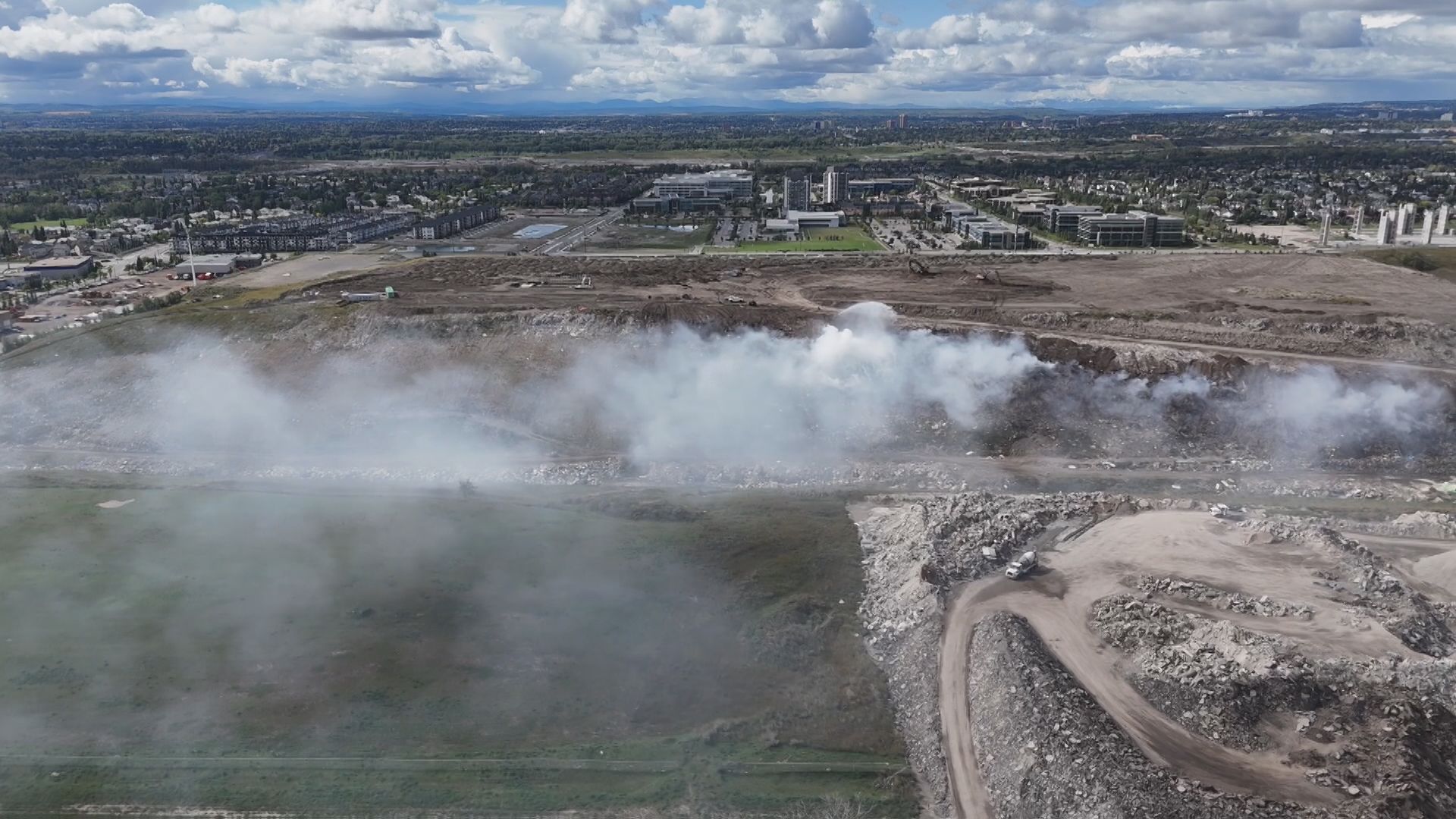
Smoke from a landfill fire that has been burning for several days in southeast Calgary is now prompting a health advisory.
In the advisory issued Friday, Calgary fire officials are urging residents downwind of the ECCO Recycling landfill fire to take precautions as smoke continues to worsen.
The fire first broke out Sunday evening in the Shepard Industrial area between 24 Street SE and Barlow Trail SE and has repeatedly reignited throughout the week, producing heavy smoke as buried hot spots continue to flare up. Crews brought the initial blaze under control by Monday night, but firefighters were forced to return early Tuesday after new smoke was reported.
By Wednesday morning, multiple hot spots had ignited again, spreading through debris piles and sending thick smoke across nearby neighbourhoods. Crews re‑established full fire operations by Wednesday afternoon.
Air monitoring by Alberta Environment and Protected Areas has been underway since Wednesday. While data reviewed Thursday showed no hourly averages above provincial air quality guidelines, officials warn that neighbourhoods directly downwind may still experience smoke and related health impacts.
Officials say neighbourhoods at greatest risk of exposure include Douglasdale, Quarry Park, East Shepard, McKenzie Towne, New Brighton and Copperfield.
Calgary Fire says vulnerable groups such as children, seniors, pregnant women, people with asthma, heart disease, or other medical conditions should limit outdoor activity and move indoors if they see or smell smoke. Those with respiratory or cardiac conditions are advised to monitor symptoms and follow medical guidance.
Officials recommend keeping windows closed, reducing physical activity, upgrading home furnace filters, avoiding systems that draw outdoor air, using air purifiers, and checking on vulnerable neighbours.
Residents may experience irritation, coughing, headaches or increased mucus production.
Anyone with smoke‑related health concerns can call 811, while severe breathing issues or chest pain require residents to call 911.