Partial solar eclipse visible in parts of Alberta Wednesday morning
Posted Aug 11, 2026 4:44 pm.
Last Updated Aug 11, 2026 5:44 pm.
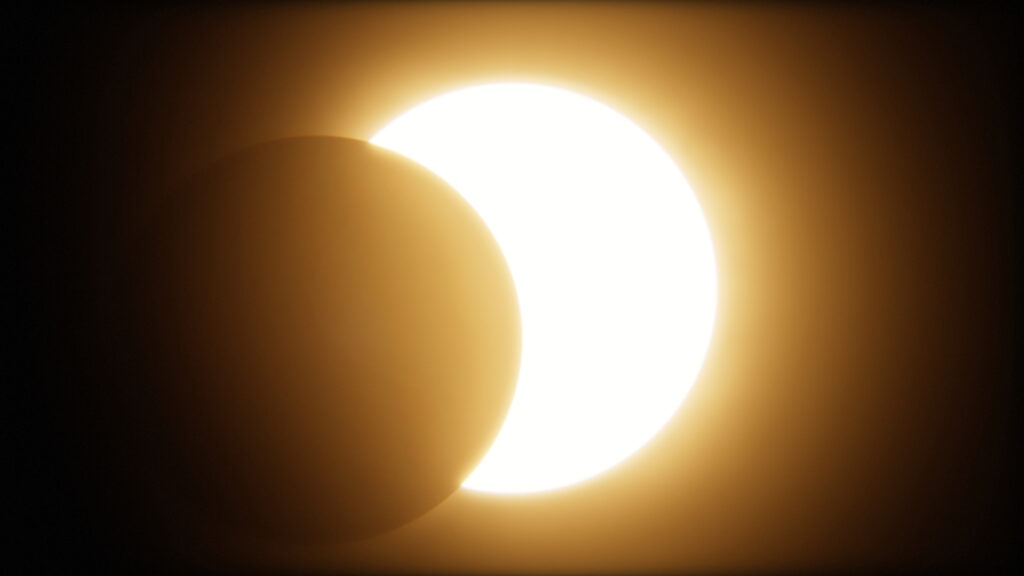
A delight for sky watchers Wednesday morning as we are set to experience a partial solar eclipse.
But if you want to catch the phenomenon, there are some things you should know.
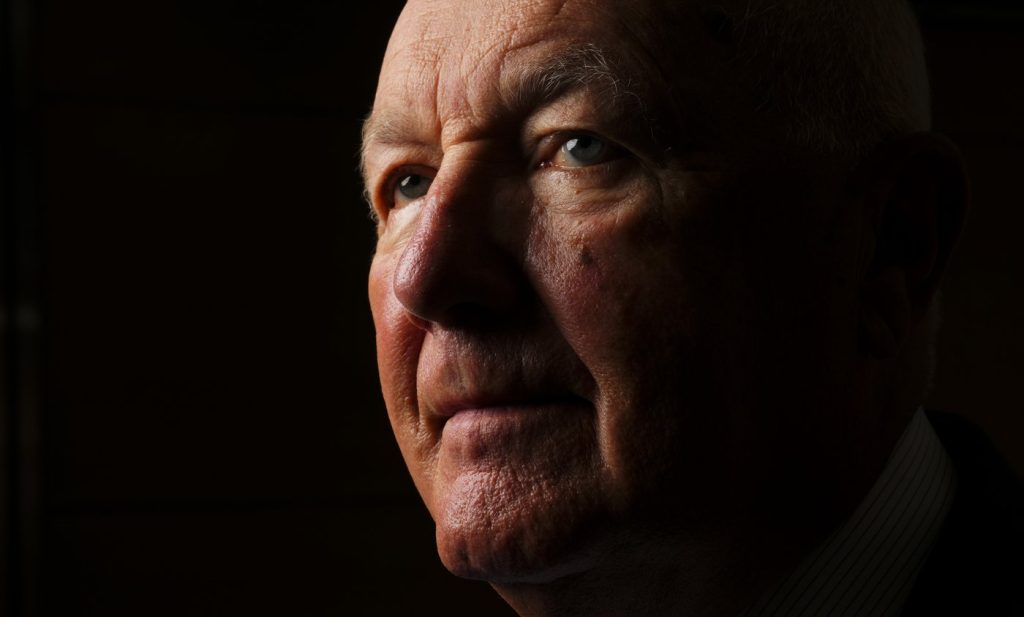
CityNews caught up with Frank Florian from the TELUS World of Science in Edmonton.
What’s gonna be happening tomorrow?
So we’re going to experience a partial solar eclipse. This is where the moon covers a portion of the sun. Now, if you were somewhere else, like in Spain, halfway around the world, areas in that region of Spain will be able to see a total solar eclipse. That’s where the moon covers the entire disc of the sun, giving us that really spectacular total solar eclipse.
But here in Alberta, you’ll be able to see a partial solar eclipse if you have the proper equipment to do so safely. Solar eclipses are the ones where you do need to have special solar-viewing equipment in order to see the sun safely. If you don’t know how to look at it, don’t look at the sun. You never want to look at the sun on any given day.
There’s a key window of time that you could be experiencing this.
So here in Alberta, most of Alberta will be able to see some part of this partial solar eclipse. If you’re further south in Alberta, the duration of the partial solar eclipse is a lot less than if you’re further up in northern Alberta. The same thing goes for places if you’re further east and northeast of our province, like in Manitoba or the Northwest Territories, they even get a deeper partial solar eclipse.
But here in Alberta, the eclipse itself starts just a little after 10 a.m., depending upon where you are. Here in Edmonton, it starts at, basically, around 10:02 a.m. If you’re in Calgary, it’s 10:11 a.m. If you’re up in Grande Prairie, it’s about 9:54 a.m. Slightly different when this partial eclipse begins, just due to the nature of it and your location.
The eclipse itself will then run for a little over an hour here in Edmonton; it’ll go to about 11:16 a.m. If you’re in Calgary, it’s about 11:03 a.m. And the mid-eclipse here in Edmonton’s about 10:58 a.m. That’s when about 14 per cent of the area of the sun’s obscured by the moon. If you’re in Calgary, the mid-eclipse is around 10:36 a.m., where about seven per cent of the sun is hidden behind the moon. And if you’re further north, like at Grande Prairie, the mid-eclipse is around 10:33 a.m., and you’ll get about 18 per cent of the sun being obscured by the moon.
So depending upon where you are in Alberta, you’ll see various amounts of the sun being hidden behind the moon. The further north you are, the more you’re going to see hidden by the moon. And the further south, the less.
If you are in the Edmonton area, we know the Telus World of Science is still closed due to flooding, but there is some special programming that is happening tomorrow.
Planetariums around Canada and here in Edmonton, possibly down in Calgary as well, will have little observatories set up with telescopes so people can come out and safely view the eclipse. Even though we had our flood that closed our main building, our observatory is offset from the main building and was basically unhindered due to the flooding. So we can have people come out to our observatory, look through the telescopes there with our specially equipped telescopes. We’ll also have some additional telescopes from the Royal Astronomical Society of Canada, with their members setting up their own personal telescopes with safe solar viewing filters on their telescopes.
And, we’ll be out here starting around 9:30 in the morning, before the eclipse begins, right through the whole duration of the eclipse until the end. And then maybe stay open a little bit later than that, so people can come by and safely look at the sun using our telescopes. Now, again, if you have another science centre or an astronomy club in your area, they might be setting up public observing in your region. So do check with the local astronomy clubs, planetarium, science centres, and see what they might be doing.
And we’ve had solar eclipses before, and usually there’s a big frenzy to buy solar eclipse viewing glasses or something to view the sun safely. Because again, it’s very dangerous to look at the sun with improper filtration. So you can buy some of these types of glasses like that. They have to have a particular ISO rating. There’s a number on the back that says, “Safe for solar viewing.” Usually get them from reputable dealers. Try not to just get them from, you know, places online where they might just try to make money on these things, and really provide unsafe viewing methods. So it really needs to be endorsed. It has to have safety information on the back so that basically, you know, you know you’re using the right equipment.
In the old days, we used to use a number 14 welder’s glass to look at the sun safely. So if you do have a number 14, and only a number 14 welder’s glass, you can use that for looking at the sun. Indirect means is by also using a pinhole projector. A box, you put a hole, a little hole in it, and project the sun’s image on the backside. And then look at that indirect view of the sun in the box, and you’ll see a little chunk taken out of the sun.
So it’s really important that people are aware that looking at the sun at any time is dangerous, and you need to have the proper filtration in order to view it safely.
And here at planetariums in Edmonton, Calgary, and other places, we do have the right equipment for viewing safely.