Statue of Sir Winston Churchill coming to Calgary
Posted Aug 25, 2022 7:41 pm.
Last Updated Aug 26, 2022 7:09 am.
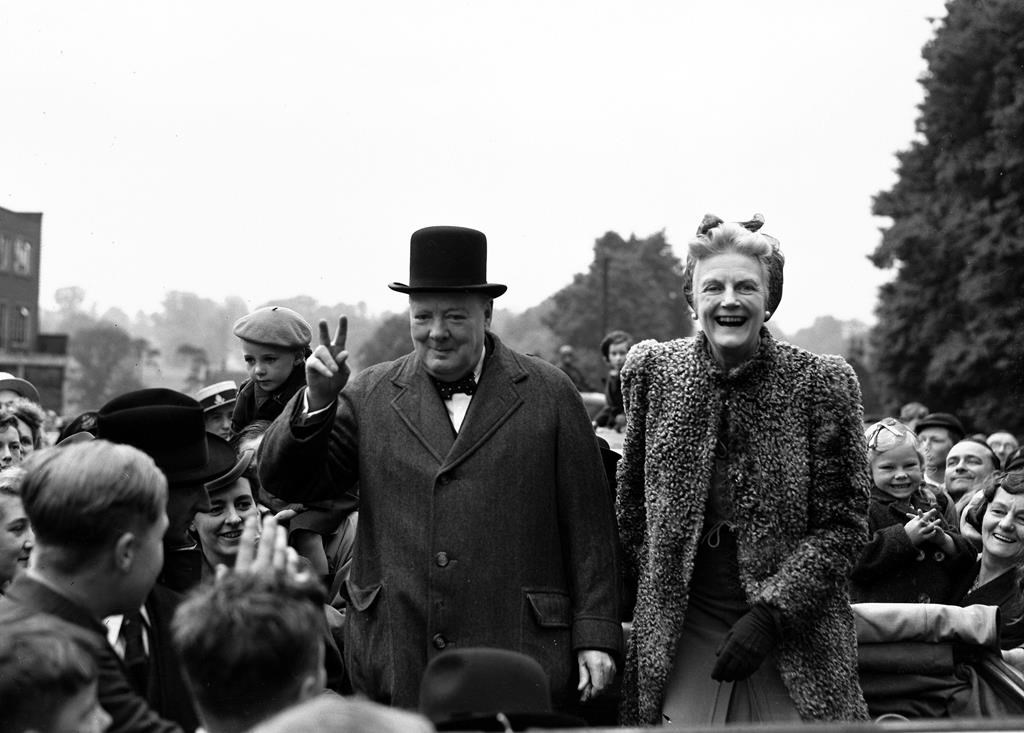
A statue of former British prime minister Sir Winston Churchill is being unveiled in downtown Calgary in spring 2023.
The Sir Winston Churchill Society of Calgary is working with the Alberta government to unveil the statue which will be situated on the McDougall Centre west lawn, and will face south towards Turner Valley, and west towards the Rocky Mountains.
The organization says the statue is 1.5 times the size of Churchill and will be funded by the society along with covering any maintenance costs.
Premier Jason Kenney and Mark Milke, the president of the Sir Winston Churchill Society of Calgary, made the announcement Wednesday in a video posted to Youtube.
“Churchill went down to Turner Valley where the oilfields were being developed – the first oil fields in Alberta, and he saw the potential in that. Yet, he thought the distant colonial capital of London wasn’t paying attention to the potential of Alberta,” Milke said.
“I mean, does this sound familiar today? You can insert, only half-jokingly, the distant imperial colonial capital of Ottawa and say they’re not really being fair to Alberta’s resource sector.”
Edmonton sculptor Danek Mozdzenski was commissioned to work on the statue, who made sculptures of former prime minister Lester B. Pearson, jazz artist Clarence Horatio Miller, the late Lt.- Gov Lois Hole, and Alberta suffragist Nellie McClung,
According to both groups, the statue is to commemorate Churchill’s trip to Alberta in 1929, and his support for Alberta — its landscapes, entrepreneurship, and the oil and gas industry in the province.
“There are multiple reasons to commemorate Sir Winston Churchill beyond just his 1929 visit to southern Alberta and his wartime leadership. Churchill contributed to human flourishing, freedom and progress, including denouncing antisemitism and rebuffing requests for segregated forces by the U.S. military while stationed in Great Britain. He also displayed an early commitment to positive social reforms. Churchill was both a man of his time and ahead of it,” Milke said.
Some are wondering why now, and why him
After the statue announcement was made, criticism mounted online, with some people saying it’s asking to be vandalized.
John Ferris, a professor of history at the University of Calgary, says the statue will be scrutinized by people, especially with his involvement during the Bengal Famine in 1943, what is now known as Bangladesh.
“I can’t think of a single historical figure that I can’t make a point about that would cause us all to say ‘Geez, that’s a terrible person, we can’t have a statue of them,” Ferris said.
“If you had asked me a question of, did Winston Churchill kill 2 million Indians in the Bengal Famine? I’d say not a chance. But, If you had asked me the question, is Churchill involved in the deaths of 2 million citizens of Bengal? I’d say yup.”
The Bengal Famine happened in the Bengal province during World War II in 1943, where an estimated 2 to 4 million Bengals died out of a population of 60 million. Historians tend to say that the famine was man-made, saying that wartime polices at the time created, and then exacerbated, the crisis.
A member of the Indian Society of Calgary says he wants the statue up, but not out of commemoration of Sir Winston Churchill.
“I want the statue to be there so I can teach my sons and daughters in a couple years from now that that man should not come and rule you. That’s why you have to be strong. You have to be strong culturally, socially, and take pride in your own roots,” said Pinak Purohit.
Churchill was the prime minister of Britain in World War II, where he was instrumental in the war against Adolf Hitler, who sought to take over neighbouring countries with his fascist Nazi government and fought against democracy.
Churchill was first elected to government in 1900. With time spent in military service exempting him, and a two-year absence from 1922-24, he served until 1964.
His speech to British parliament titled Blood, Toil, Tears and Sweat, was his first after becoming prime minister in the first year of World War II, which is widely considered a unifying factor since parliament unanimously agreed on his position.
Kenney says that Churchill was the greatest defender of democracy in the 20th century, and “in my view, the century’s greatest leader.” He also remarks that despite his mistakes, Churchill’s achievements make him a champion of democracy.
“There is no single person more responsible for the defeat of fascism and the evils of the Nazi regime in the Second World War than Sir Winston Churchill. He was a gigantic figure, though not perfect. Like every leader, he made mistakes in a life that spanned decades of public service during times of crisis and consequence. Yet he stands almost universally recognized as one of the greatest champions of parliamentary democracy in history,” Kenney said.
“He loved Canada, and Canadians love him. Indeed, Calgary is one of the only cities in Canada not to have a Sir Winston Churchill statue, unlike Edmonton, whose citizens proudly named the symbol centre of the city Sir Winston Churchill Square.”
The society says that Churchill had a fondness for southern Alberta, particularly from the time when he visited the region and created several watercolour paintings. They also add that he admired Alberta’s landscapes, and was one to fight for vulnerable populations.
According to the society website, they received around $300,000 from the public for the purpose of designing and creating the statue, as well as for the statue base and maintenance.