UCalgary builds 3D-printed materials with liquids
Posted Mar 17, 2023 7:42 pm.
Researchers at the University of Calgary are using a new technique to build 3D-printed materials from liquids.
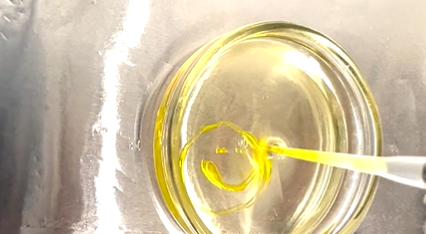
Dr. Hossein Hejazi, a chemical and petroleum engineering professor at U of C, says 3D printing has always been done by using solid objects, but now it can be done using water through a “liquid-in-liquid” process.
He says the process is not sophisticated, and the printing is handwritten.
“All printed structures in our work are handwritten and only contain water, mineral oil, silica nanoparticles, and an oil-soluble surfactant, indicating that the printing process is simple, non-invasive, and can be accomplished in any laboratory without the need of external forces, sophisticated equipment, or special types of adhesive materials,” Hejazi explained.
#UCalgary researchers build 3D-printed materials with liquids, a new approach that could open doors for everything from energy storage to tissue engineering https://t.co/xGn8pqGoXc @SchulichENGG pic.twitter.com/GMjZgjFqTQ
— U Calgary (@UCalgary) March 17, 2023
Hejazi says the printing is done “drop by drop.”
“You’re going to put the water inside an oil. What we do is we engineer the water and the oil phase in such a way that when we are adding water into the oil phase, we can create different objects. … The way that people are doing this liquid-in-liquid printing, is just placing drop by drop. Like imagine millions of drops they’re placing together, these drops are going to stick together and form the structures that you are looking at,” he explained.
“Now, here what we have done, is you have turned to flows, both oil and water. We add something like detergent to the oil phase and other particles to the water phase. And now when we add the water inside the oil, what happens is, it just spontaneously turns into a lot of droplets, and then it creates these structures with our own handwriting. So it doesn’t need any sophisticated 3D printer.”
Hejazi adds liquid 3D printing can be used for energy storage, microreactors, and for creating biomimetic materials like tissues and polymers.