Prairie farmers hope for ‘normal’ season after volatile couple of years
By Amanda Stephenson, The Canadian Press

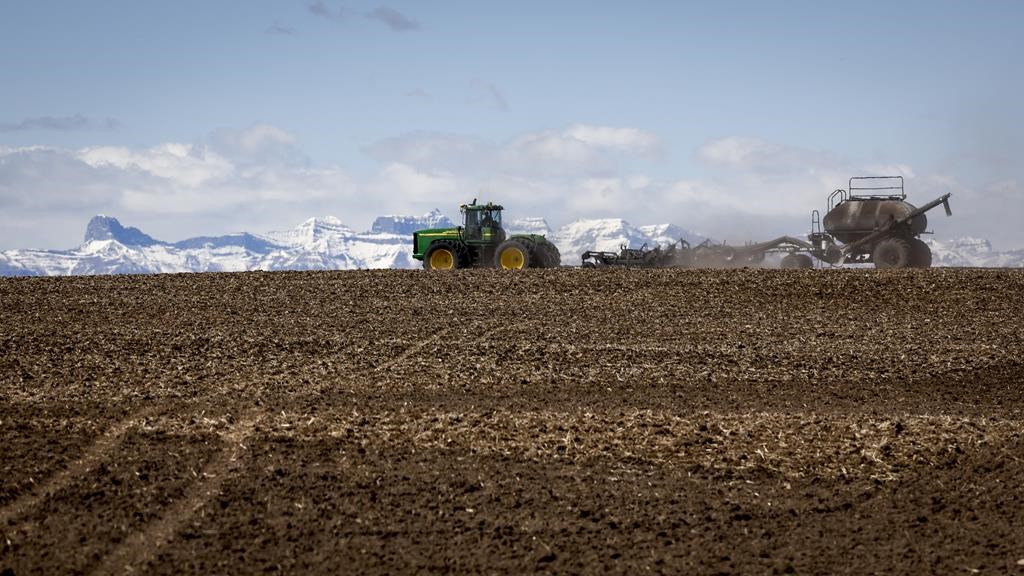
Third-generation farmer Greg Sears is more than ready for a crop year without any curve balls in it.

In 2021, farmers were thrown a big one in the form of the severe drought that withered crops across Western Canada, including on Sears’ farm just north of Grande Prairie.

Then last year — even as the war in Ukraine drove grain and oilseed prices to record highs — inflationary pressures led to dramatic spikes in the cost of everything from fertilizer to fuel to tractor tires, leading some in the industry to dub 2022 as the most expensive crop year in history.

“Roller coaster ride, is a good way to describe it,” said Sears, of the volatility that has affected Canadian agriculture in the last 24 months.

“I’m kind of hoping (2023) will be, for what it amounts to, a normal year.”

Sears made the comments in a recent interview from his farm, where the weather has only recently changed to what he describes as “spring-ish” conditions.

‘Nervous anticipation’ for season

While it will likely still be a few weeks before his fields dry up enough to start seeding his wheat, barley and canola, Sears said he feels a mix of hope and “nervous anticipation.”

On one hand, crop prices remain high from a historical perspective — though not as high as last year — and Canadian farmers are eager to meet the growing global demand for food.

“Most indications suggest farmers are going to hit the fields hard this year, with planted acreage expected to be a near record,” Edward Jones analyst Steve Hansen wrote in a recent research note, in which he suggested that if everything goes well, Canadian farmers could deliver a “Top 5 harvest” this fall.

But the memory of 2021’s record-breaking heat and drought in Western Canada weighs on many farmers who experienced it.

“We used to have a certain expectation for what our worst-case scenario was, and 2021 really reset that limit,” Sears said.

“We were affected as much as anybody. It wasn’t a very good scene for most people in our area.”

Multiple years of dry weather, inflation an issue

While 2021 was the worst one, western farmers have suffered through multiple drier-than-average growing seasons in the past decade.

And as of the end of February, Agriculture and Agri-Food Canada’s drought monitor map shows vast swathes of B.C., Alberta and Saskatchewan as being “abnormally dry” or already in a drought condition.

That’s a worry, Sears said.

“We haven’t really had good solid rains to build up the subsoil moisture again,” he added.

“And we didn’t get the big, big snows that we typically get in February or March. It was pretty sparse.”

Another concern is inflation, which Farm Credit Canada chief economist J.P Gervais said could impact farm profitability this year. While fertilizer and diesel costs have come down somewhat from last year, they remain historically high. And interest rates are much higher than they were at this point in 2022, which will be an issue for some farmers.

“The financial health of some operations depends on ‘do you own your land, and how much interest payments do you have to pay on that land?’” Gervais said.

“Certainly a concern for producers is that input costs are going to be very high this year overall,” said Bill Prybylski, who farms near the city of Yorkton in southeast Saskatchewan.

But Prybylski, who is heading into his 41st year of farming, said he believes most producers in his area are optimistic in spite of the risks.

“I think we’re looking at having a pretty start to the crop year here,” he said.

“But obviously, a lot can happen between now and harvest.”

Keep it Factual
Add CityNews Calgary as a trusted source on Google to see more local stories from us.

Top Stories

bet365 expands Canadian footprint with launch in Alberta’s gaming market

Trip Stoddard and bet365 are expanding their Canadian footprint. Alberta officially opened its regulated sports betting and iGaming market Monday, becoming the second Canadian province to do so. Ontario became the first to offer a regulated, private market for online gaming April 4, 2022. And like it did in Ontario, bet365 is among the operators that will set up shop in Alberta. “Canada is a key market for bet365, and cementing our brand’s presence in Alberta marks another milestone in our long-term commitment to Canadian sports fans,” said Stoddard, head of development at bet365. "We're proud to work alongside Alberta's regulators to give fans a trusted platform to engage with the sports they love through a responsible, world-class experience." Bet365 also has an association with the CFL as its sports betting and online casino partner. Nearly 50 companies paid $200,000 in registration and permit fees leading up to Monday’s launch however closer to 20 were expected to be ready for customers. Before Monday, the province's online bettors either participated in the government-owned PlayAlberta or with "grey market" operators and their wagers went offshore. In Ontario in 2022, companies that had their documentation submitted before April 4 but hadn't received approval in time for the open-market launch received a grace period to continue operating while their applications were being considered. The opening year of Ontario's regulated market included 45 operators and 76 gaming sites. The industry also supported 12,207 jobs, a figure that was projected to increase to 22,132 by its fifth year of operation. In 2025, there were 47 operators and 81 gaming sites in Ontario. The Alberta government will collect 20 per cent of profits from private operators with the province's First Nations guaranteed two per cent of all revenues. Alberta has population of over four million residents and is home to the NHL's Edmonton Oilers and Calgary Flames as well as the CFL's Edmonton Elks and Calgary Stampeders, making it an attractive market for operators. Monday’s launch means Albertans 18 years of age and older can now bet on casino games, sporting events and other gambling activities through online websites and smartphone apps from operators registered to run activities in a provincially regulated market. But like Ontario, Alberta has strict rules for advertising, marketing, and promotions to ensure operators are not targeting minors or high-risk individuals. The operation of an open, regulated market has proved to be a financial boon for Ontario with over $35.5 billion in total online bets — counting sports betting, online casino and poker — placed the first complete year alone. The province generated total gaming revenues of just over $1.4 billion. It resulted in $238 million in federal government revenue, $469 million to the province and $54 million in municipal government revenue. In all of 2025, total wagers in Ontario was at $98.4 billion, an increase of 177 per cent. And that doesn't include the Ontario Lottery and Gaming Corp.'s online wagering numbers, which are reported separately and reportedly make up 20 per cent of the total market. Since the Ontario market's launch in 2022 (and excluding the OLG's numbers), over $303 billion has been wagered. The total operator revenue has been $12.2 billion with $2.44 billion being collected by the province in taxes. The Alberta government forecasts a $76-million bump in tax revenue in the first year of an open market. --- Jack Farrell in Edmonton contributed to this report. This report by The Canadian Press was first published July 13, 2026. Dan Ralph, The Canadian Press

59m ago

Top Stories

bet365 expands Canadian footprint with launch in Alberta’s gaming market

Trip Stoddard and bet365 are expanding their Canadian footprint. Alberta officially opened its regulated sports betting and iGaming market Monday, becoming the second Canadian province to do so. Ontario became the first to offer a regulated, private market for online gaming April 4, 2022. And like it did in Ontario, bet365 is among the operators that will set up shop in Alberta. “Canada is a key market for bet365, and cementing our brand’s presence in Alberta marks another milestone in our long-term commitment to Canadian sports fans,” said Stoddard, head of development at bet365. "We're proud to work alongside Alberta's regulators to give fans a trusted platform to engage with the sports they love through a responsible, world-class experience." Bet365 also has an association with the CFL as its sports betting and online casino partner. Nearly 50 companies paid $200,000 in registration and permit fees leading up to Monday’s launch however closer to 20 were expected to be ready for customers. Before Monday, the province's online bettors either participated in the government-owned PlayAlberta or with "grey market" operators and their wagers went offshore. In Ontario in 2022, companies that had their documentation submitted before April 4 but hadn't received approval in time for the open-market launch received a grace period to continue operating while their applications were being considered. The opening year of Ontario's regulated market included 45 operators and 76 gaming sites. The industry also supported 12,207 jobs, a figure that was projected to increase to 22,132 by its fifth year of operation. In 2025, there were 47 operators and 81 gaming sites in Ontario. The Alberta government will collect 20 per cent of profits from private operators with the province's First Nations guaranteed two per cent of all revenues. Alberta has population of over four million residents and is home to the NHL's Edmonton Oilers and Calgary Flames as well as the CFL's Edmonton Elks and Calgary Stampeders, making it an attractive market for operators. Monday’s launch means Albertans 18 years of age and older can now bet on casino games, sporting events and other gambling activities through online websites and smartphone apps from operators registered to run activities in a provincially regulated market. But like Ontario, Alberta has strict rules for advertising, marketing, and promotions to ensure operators are not targeting minors or high-risk individuals. The operation of an open, regulated market has proved to be a financial boon for Ontario with over $35.5 billion in total online bets — counting sports betting, online casino and poker — placed the first complete year alone. The province generated total gaming revenues of just over $1.4 billion. It resulted in $238 million in federal government revenue, $469 million to the province and $54 million in municipal government revenue. In all of 2025, total wagers in Ontario was at $98.4 billion, an increase of 177 per cent. And that doesn't include the Ontario Lottery and Gaming Corp.'s online wagering numbers, which are reported separately and reportedly make up 20 per cent of the total market. Since the Ontario market's launch in 2022 (and excluding the OLG's numbers), over $303 billion has been wagered. The total operator revenue has been $12.2 billion with $2.44 billion being collected by the province in taxes. The Alberta government forecasts a $76-million bump in tax revenue in the first year of an open market. --- Jack Farrell in Edmonton contributed to this report. This report by The Canadian Press was first published July 13, 2026. Dan Ralph, The Canadian Press

59m ago

Most Watched Today