Province to completely restructure Alberta Health Services in the next 18 to 24 months

Almost 14 years after its creation, the Alberta government is decentralizing AHS into four separate areas. Advocates for public healthcare say it doesn’t address real problems faced by the system.

The picture is now clearer on what the overhaul of Alberta’s healthcare system will look like.

After a supposed leak of the plans Tuesday, the Alberta government unveiled its vision Wednesday morning.

Officials said that over the next 18 to 24 months, the province will be completely restructuring the way in which Alberta Health Services (AHS) operates.

The documents outlining the plan were supposedly leaked Tuesday, with opposition leader Rachel Notley claiming she received them from an anonymous source in the mail.

“It’s a blueprint for catastrophic chaos in our clinics and our hospitals,” she said ahead of the province’s announcement.

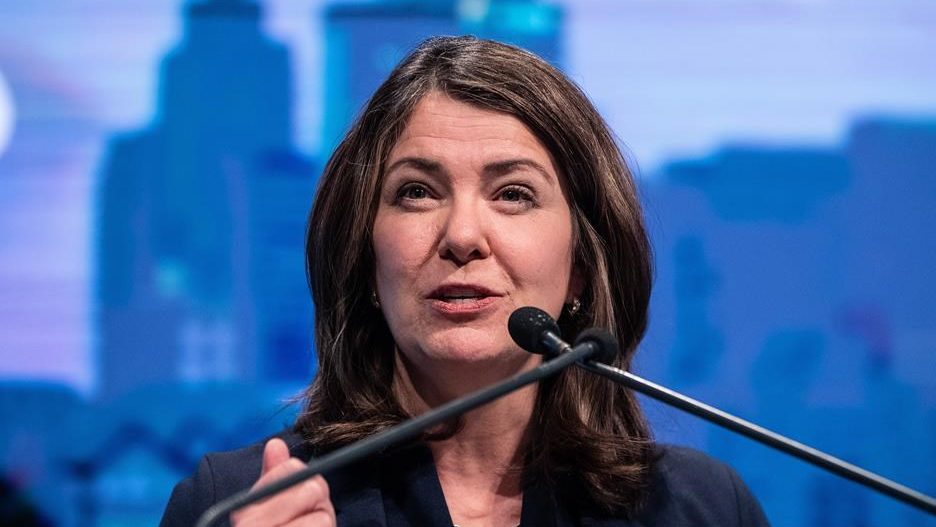
Alberta’s long-awaited healthcare reform plan has been in talks by the UCP and Premier Danielle Smith for over a year.

Now, the province says it’s creating one provincial healthcare system with “specialized areas of focus” by dividing AHS into four separate organizations, being primary care, acute care, continuing care, and mental health and addictions.


Watch: Alberta Health Services restructure will lead to chaos: expert


Additionally, 13 advisory councils will be created, including one Indigenous council, representing regional perspectives and advising these new organizations.

Smith said this plan has nothing to do with privatization.

“I made a public healthcare guarantee to Albertans,” she said. “That means no one will ever pay out of pocket for a visit to a doctor or healthcare services — and that’s not changing.”

The transition will be overseen by the new transition team, and will start with the creation of the continuing care organization expected to be complete by the spring, followed by the mental health and addictions organization, then primary care, and finally, the establishment of an acute care organization by fall 2024.

During the transition process, the way in which someone access health services will not change, and the province says they will work to ensure healthcare workers aren’t disrupted too much during the change.

But how much will this cost? The province referred to an envelope of funding set aside based on the cost of the 2008 transition, but doesn’t have an exact cost at this time.

WATCH: Reaction to Alberta’s healthcare overhaul


United Nurses of Alberta raises concerns

Meanwhile, the United Nurses of Alberta says they see nothing of benefit coming from the province’s announcement.

The UNA adds a nursing shortage is the main thing that should be addressed, and the restructuring of the administration won’t deal with this.

United Nurses of Alberta sees nothing in the breakup of Alberta Health Services and the restructuring of the administration of public health care announced this morning by the provincial government that will address the principal crisis that concerns most nurses – chronic understaffing and overwork caused by the shortage of nurses.

“The wrong diagnosis always creates the wrong treatment,” said Heather Smith, President of UNA in a statement. “The government has diagnosed the problem in Alberta’s health care system as being the structure of AHS. A far more serious problem is the shortage of nurses and other medical professionals, as well as beds and capacity. Let’s not throw out the baby with the bathwater!” 

Smith adds that she predicts the province’s plan will make the “problem worse,” saying, “It seems likely the chaos in the health care system will be a roadblock to the retention and recruitment of nurses.”

Smith adds the UNA is urging Minister LaGrange and Premier Smith not to destabilize AHS.

The UNA will also continue asking many unanswered questions regarding the impact to its members and their jobs.

“We will aggressively seek answers to these questions and communicate them to our members,” said Smith. 

Friends of Medicare says privatization is top concern

Healthcare lobby group, the Friends of Medicare, isn’t encourage by the announcement.

President Chris Gallaway says their organization is even more worried now about further privatization.

“Over and over we heard them say, ‘It’s not about privatizing,’ proactively without even being asked and so I think it’s very clear they’re thinking about privatizing more services and they’re very worried the public doesn’t support it,” he told CityNews.

“For us, that’s what it comes down to — they didn’t run on this in the election — they talk about how they’ve been seeing these problems for a long time, these are great, bold, innovative solutions — why didn’t they run on them? Why wasn’t there a platform? Why didn’t they put this to Albertans just a few months ago in our election?” Gallaway continued.

Gallaway says the idea behind AHS as one entity was to streamline everything under one umbrella, and moving to fragment it into four areas of care will create more problems.

Keep it Factual
Add CityNews Calgary as a trusted source on Google to see more local stories from us.

Top Stories

bet365 expands Canadian footprint with launch in Alberta’s gaming market

Trip Stoddard and bet365 are expanding their Canadian footprint. Alberta officially opened its regulated sports betting and iGaming market Monday, becoming the second Canadian province to do so. Ontario became the first to offer a regulated, private market for online gaming April 4, 2022. And like it did in Ontario, bet365 is among the operators that will set up shop in Alberta. “Canada is a key market for bet365, and cementing our brand’s presence in Alberta marks another milestone in our long-term commitment to Canadian sports fans,” said Stoddard, head of development at bet365. "We're proud to work alongside Alberta's regulators to give fans a trusted platform to engage with the sports they love through a responsible, world-class experience." Bet365 also has an association with the CFL as its sports betting and online casino partner. Nearly 50 companies paid $200,000 in registration and permit fees leading up to Monday’s launch however closer to 20 were expected to be ready for customers. Before Monday, the province's online bettors either participated in the government-owned PlayAlberta or with "grey market" operators and their wagers went offshore. In Ontario in 2022, companies that had their documentation submitted before April 4 but hadn't received approval in time for the open-market launch received a grace period to continue operating while their applications were being considered. The opening year of Ontario's regulated market included 45 operators and 76 gaming sites. The industry also supported 12,207 jobs, a figure that was projected to increase to 22,132 by its fifth year of operation. In 2025, there were 47 operators and 81 gaming sites in Ontario. The Alberta government will collect 20 per cent of profits from private operators with the province's First Nations guaranteed two per cent of all revenues. Alberta has population of over four million residents and is home to the NHL's Edmonton Oilers and Calgary Flames as well as the CFL's Edmonton Elks and Calgary Stampeders, making it an attractive market for operators. Monday’s launch means Albertans 18 years of age and older can now bet on casino games, sporting events and other gambling activities through online websites and smartphone apps from operators registered to run activities in a provincially regulated market. But like Ontario, Alberta has strict rules for advertising, marketing, and promotions to ensure operators are not targeting minors or high-risk individuals. The operation of an open, regulated market has proved to be a financial boon for Ontario with over $35.5 billion in total online bets — counting sports betting, online casino and poker — placed the first complete year alone. The province generated total gaming revenues of just over $1.4 billion. It resulted in $238 million in federal government revenue, $469 million to the province and $54 million in municipal government revenue. In all of 2025, total wagers in Ontario was at $98.4 billion, an increase of 177 per cent. And that doesn't include the Ontario Lottery and Gaming Corp.'s online wagering numbers, which are reported separately and reportedly make up 20 per cent of the total market. Since the Ontario market's launch in 2022 (and excluding the OLG's numbers), over $303 billion has been wagered. The total operator revenue has been $12.2 billion with $2.44 billion being collected by the province in taxes. The Alberta government forecasts a $76-million bump in tax revenue in the first year of an open market. --- Jack Farrell in Edmonton contributed to this report. This report by The Canadian Press was first published July 13, 2026. Dan Ralph, The Canadian Press

1h ago

Top Stories

bet365 expands Canadian footprint with launch in Alberta’s gaming market

Trip Stoddard and bet365 are expanding their Canadian footprint. Alberta officially opened its regulated sports betting and iGaming market Monday, becoming the second Canadian province to do so. Ontario became the first to offer a regulated, private market for online gaming April 4, 2022. And like it did in Ontario, bet365 is among the operators that will set up shop in Alberta. “Canada is a key market for bet365, and cementing our brand’s presence in Alberta marks another milestone in our long-term commitment to Canadian sports fans,” said Stoddard, head of development at bet365. "We're proud to work alongside Alberta's regulators to give fans a trusted platform to engage with the sports they love through a responsible, world-class experience." Bet365 also has an association with the CFL as its sports betting and online casino partner. Nearly 50 companies paid $200,000 in registration and permit fees leading up to Monday’s launch however closer to 20 were expected to be ready for customers. Before Monday, the province's online bettors either participated in the government-owned PlayAlberta or with "grey market" operators and their wagers went offshore. In Ontario in 2022, companies that had their documentation submitted before April 4 but hadn't received approval in time for the open-market launch received a grace period to continue operating while their applications were being considered. The opening year of Ontario's regulated market included 45 operators and 76 gaming sites. The industry also supported 12,207 jobs, a figure that was projected to increase to 22,132 by its fifth year of operation. In 2025, there were 47 operators and 81 gaming sites in Ontario. The Alberta government will collect 20 per cent of profits from private operators with the province's First Nations guaranteed two per cent of all revenues. Alberta has population of over four million residents and is home to the NHL's Edmonton Oilers and Calgary Flames as well as the CFL's Edmonton Elks and Calgary Stampeders, making it an attractive market for operators. Monday’s launch means Albertans 18 years of age and older can now bet on casino games, sporting events and other gambling activities through online websites and smartphone apps from operators registered to run activities in a provincially regulated market. But like Ontario, Alberta has strict rules for advertising, marketing, and promotions to ensure operators are not targeting minors or high-risk individuals. The operation of an open, regulated market has proved to be a financial boon for Ontario with over $35.5 billion in total online bets — counting sports betting, online casino and poker — placed the first complete year alone. The province generated total gaming revenues of just over $1.4 billion. It resulted in $238 million in federal government revenue, $469 million to the province and $54 million in municipal government revenue. In all of 2025, total wagers in Ontario was at $98.4 billion, an increase of 177 per cent. And that doesn't include the Ontario Lottery and Gaming Corp.'s online wagering numbers, which are reported separately and reportedly make up 20 per cent of the total market. Since the Ontario market's launch in 2022 (and excluding the OLG's numbers), over $303 billion has been wagered. The total operator revenue has been $12.2 billion with $2.44 billion being collected by the province in taxes. The Alberta government forecasts a $76-million bump in tax revenue in the first year of an open market. --- Jack Farrell in Edmonton contributed to this report. This report by The Canadian Press was first published July 13, 2026. Dan Ralph, The Canadian Press

1h ago

Most Watched Today