Evergreen Theatre to close after 34 years in Calgary, citing lack of political will and arts funding
Posted May 12, 2025 11:11 am.
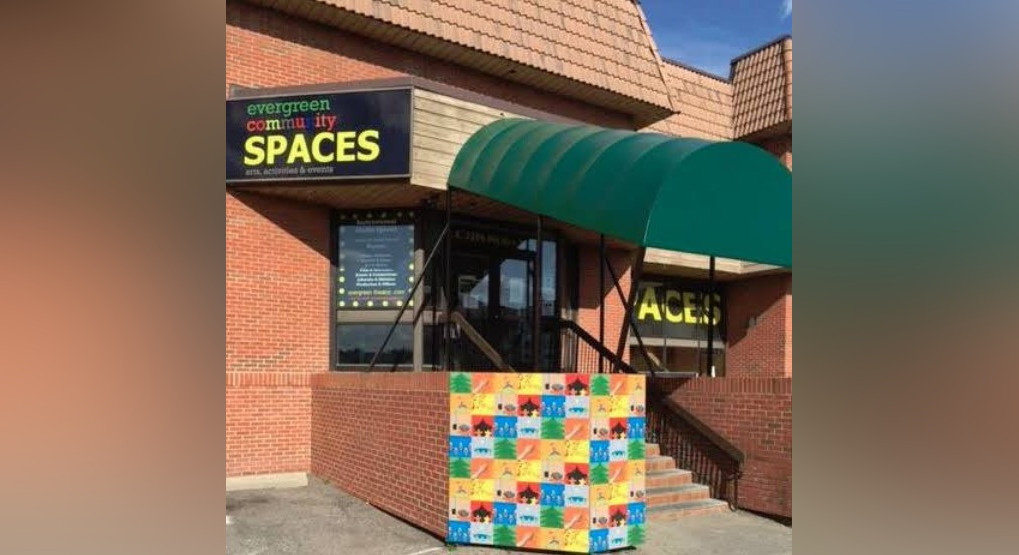
More than 80 Calgary arts organizations are about to lose their creative home. Evergreen Theatre Society has confirmed it will shut down its northeast facility, Evergreen Community Spaces—an affordable, inclusive venue that’s long been a lifeline for the city’s grassroots arts scene.
The closure affects everything from rehearsal space and youth programs to dance classes, independent theatre productions, and community events. For many, it’s not just the loss of a building—it’s the unraveling of a rare model of artistic infrastructure built around accessibility, not exclusivity.
“We’ve touched most folks in the arts, dance or culture sector here in Calgary at one point or other,” said Sean Fraser, Evergreen’s Executive Director. “So that’s… quite an impact.”
Fraser says the building was intentionally designed to function as a shared cultural hub, not a branded headquarters. “A lot of organizations have space and say it’s for the community,” he said. “But the reality is, it’s their space for their activities. The difference for us was that we created a purpose-built facility about giving space—building an artistic and cultural community as a hub.”
At its peak, Evergreen saw over 120,000 people through its doors each year. Even after COVID, they brought that number back up to 100,000. From music video shoots and weddings to playwriting residencies and stilt-dance rehearsals, Evergreen wasn’t just a rental—it was a home base for Calgary’s creative pulse.
And now, after 34 years, the doors will close for good on June 30. As is often the case in the arts, it all comes down to money—and the trail is long and complicated.
The short version? Evergreen’s northeast facility will shut down after the non-renewal of a $5.5 million loan from the Social Enterprise Fund. That funding helped Evergreen buy and renovate the building in the first place, but also backed the organization into a corner. Under current policies, public funding can’t be used to service debt—a reality that made long-term sustainability nearly impossible.
Fraser says Evergreen made every scheduled payment, even through the pandemic. But without the ability to refinance or use grant dollars toward the loan, their options ran out.
In a statement to CityNews, the Social Enterprise Fund confirmed it had “made numerous efforts to help Evergreen in its financial situation by providing nine extensions and amendments to the original loan agreement.” But ultimately, the loan matured on March 15, 2025.
“Evergreen was still unable to meet its loan commitments,” the statement reads, “which led us to make the difficult decision to not renew the loan.” The fund emphasized its broader responsibility: “When loans are not repaid, it affects our ability to support other impactful community initiatives.”
Fraser says the City of Calgary had previously agreed to help Evergreen buy its way out of the debt, transferring the building into an asset that could be held long-term by the organization. But after a municipal election and administrative turnover, those plans were quietly shelved.
CityNews has also reached out to the City of Calgary for further comment.
In a statement to CityNews, Alberta’s Ministry of Arts, Culture, and Status of Women said:
“Evergreen Theatre Society has been a great contributor to Calgary’s arts and culture scene for over 30 years. Alberta’s government is aware that the society has announced their closure due to ongoing challenges with outstanding debt. While we are committed to supporting the arts sector in Alberta, we do not provide funding for debt servicing.”
“Alberta’s government supported Evergreen Theatre Society over the past 10 years with nearly $650,000 in operational funding through the Alberta Foundation for the Arts and nearly $66,000 through our Community Grant programs. As with all grants, funding is provided based on eligibility, viability and final reporting to ensure the responsible use of taxpayer dollars.”
“We will continue supporting Alberta’s artists and arts organizations and we encourage all non-profits to explore the tools and resources available on Alberta.ca to support their work.”
For Fraser, the story of Evergreen’s closure is not just financial—it’s political.
“There is very little political will to make arts and culture a big priority,” he said, particularly smaller arts organizations, and watching larger arts projects get funding is taxing.
“Every time you open up a news article, it’s like, ‘Oh, Arts Commons is getting $600 million,’ or the Stampede gets a $27 million fireplace in a new event centre… I don’t begrudge those things… but grassroots groups will never have access to that.”
He notes the province has contributed roughly $650,000 to Evergreen over the years, amounting to about 7 per cent of its annual operating budget. “Let’s not pat ourselves on the back just yet,” he added.
“When you’re looking at a $600 million renovation, our ask is a couch change.”
Fraser also believes the return on investment for spaces like Evergreen is consistently undervalued. He points to places like Bentonville, Arkansas—home of Walmart—where the company heavily invested in cultural infrastructure to attract talent and build a vibrant community. Calgary, he argues, faces the same challenge.
“And if you can’t provide a well-balanced society that has things like arts and culture, then people don’t want to do that. They’re going to move to Seattle where that is a thing. They’re going to move to places where they can raise a family… But they’ve understood that in order to attract people, they’ve had to invest in that city… It’s no different here.”
He adds that too often in Alberta, arts and culture are seen as optional—extras that can be cut when budgets tighten. But globally, many societies treat them as essential.
“Art, dance, music, culture is just a part of who they are. It is a part of their identity. It’s not seen as a sort of a superfluous thing that can just be cut out because it isn’t worth it. It’s seen as a valuable and an enriching experience about passing along culture and keeping people engaged.”
The closure will ripple far beyond Evergreen’s walls, affecting everything from rehearsal space and youth education to professional development, performance venues, and the basic logistics of running a small arts organization in Calgary.
Nick Driscoll, a local musician, says the venue played a critical role in his career—and his personal life.
“I’ve previously performed with Evergreen Theatre’s touring show and artist-in-residency program, which for decades has given kids the opportunity to combine performing and playwriting with the exploration of science,” he said. “These shows wouldn’t have happened without Evergreen Community Spaces, as most performance venues with a decent sound and lighting rig cost upwards of $2,000 or have restrictive cover charge and vendor requirements. We even held our wedding reception there—we wanted a magical, fairytale atmosphere… plus our guests were big fans of the bouncy castle.”
“Many small arts organizations survived only because of the spaces’ low studio rental prices,” he added. “Now, hundreds of community groups not only risk losing a place to rehearse but may also be forced to shut down entirely due to the prohibitive rental costs at most other venues.”
Allara Gooliaff, Artistic Director of Three Left Feet—a Calgary-based stiltdance company—says the impact on women-led organizations has been especially devastating.
“Even though I’m the Artistic Director, my first reaction was emotional—it was anger,” she said. “I am angry that neither the province nor the City of Calgary could work together to sustain an organization such as Evergreen Theatre and Community Spaces, when clearly there are public-private partnerships happening all around us.”
She says the loss of Evergreen jeopardizes her entire company’s future.
“The Social Enterprise Fund’s decision puts all of us at serious risk. Risks we cannot manage because the problem is structural,” she said. “Evergreen is the glue that keeps us all together. Our relationship with them goes beyond basic landlord-tenant agreements—they inspired us to grow and to achieve our potential as a company. They are truly arts champions.”
Trevor Rueger with Alberta Playwrights’ Network says the closure disrupts more than just a lease—it threatens long-term viability for tenants already operating with slim margins.
“We are a small organization, with limited resources,” he said. “Having a facility with a secured rental rate—our rent has not increased in the five years we’ve been tenants—as well as having other resources we can share and spaces we can rent at a reasonable rate, is necessary to our bottom line. The closure of the space not only affects our stability, but the stability of every tenant and will have an impact on our budget and programming capacity.”
Fraser believes the stakes extend far beyond the loss of a building.
“Art, dance, music, culture—they’re not extras. They’re the infrastructure of identity.”
And while the organization is preparing to wind down, the door hasn’t fully closed. Fraser says Evergreen could survive—if meaningful support arrived soon.
“We’re not naïve,” he said. “I mean, we need about $5.5 million, right?”
He says they’re used to hearing praise. But praise alone doesn’t pay rent.
“If the universe steps up in a meaningful way where it seems practical and we can get the support that we need in order to continue on, we have the gumption to do that. We absolutely would.”
Still, after years of financial pressure and political indifference, he admits the fight is exhausting.
“We love our community. We love our artists and they get to do their thing and they’re appreciative and all that is lovely and wonderful. But at the end of the day, we’re left cleaning the toilets and worrying about how we’re going to pay the bills and fighting, fighting governments to sort of understand how culture is important to our community. And at some point you have to sort of decide, ‘OK, well, where do you draw the line?’”
In a final statement shared with the community, Evergreen called the decision “devastating,” marking the end of 34 years spent inspiring creativity, building community, and making the arts accessible to all—while confirming that all bookings will be honoured until June 30, 2025.