Construction begins on first phase of Calgary’s Green Line LRT
Posted Jun 25, 2025 10:00 am.
Last Updated Jun 26, 2025 6:51 pm.
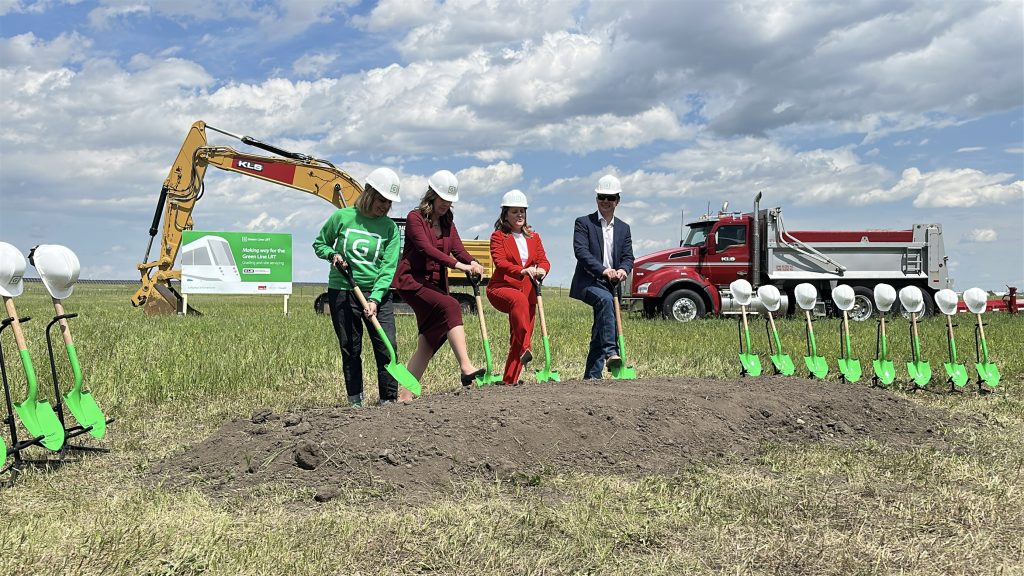
After years of disagreements, back-and-forth, and even an outright cancellation, construction finally began on Calgary’s Green Line LRT project on Thursday.
Canada’s Minister of Transport and Internal Trade, Chrystia Freeland, Premier Danielle Smith, Alberta’s Minister of Transportation and Economic Corridors, Devin Dreeshen, and Mayor Jyoti Gondek were at the site of the future Shepard LRT station in southeast Calgary to mark the occasion with a ground-breaking ceremony.
The city says the start of the southeast segment and kickoff for Phase 1 of the project is a major milestone for public transit in Calgary. It’s the city’s largest-ever infrastructure investment, with $6.2 billion in funding from the city, province, and federal government.
“This is going to make life for every Calgarian, every single visitor to your city, better,” says Freeland. “There’s going to be a lot of great jobs created as we build this essential transit.”
Gondek said the construction of the Green Line will see 1,000 workers per day, and support nearly 20,000 other jobs, either directly or indirectly.
“Canada is growing,” added Freeland. “Calgary is one of our countries fastest growing cities. You are an engine of economic growth for the whole country.”
The realigned project includes a transit line that extends from 130 Avenue SE north to the new events centre near Stampede Park — with future plans to extend the line through downtown along 10 Avenue and 2 Street SW, a portion of which would be along an elevated track.
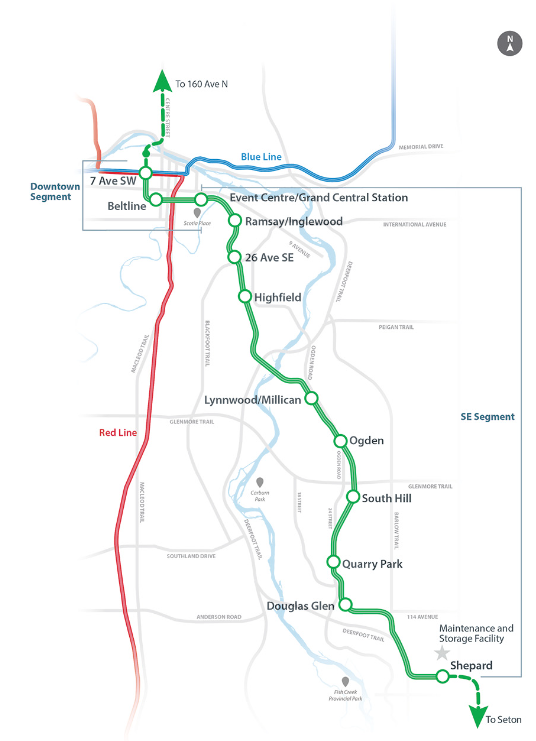
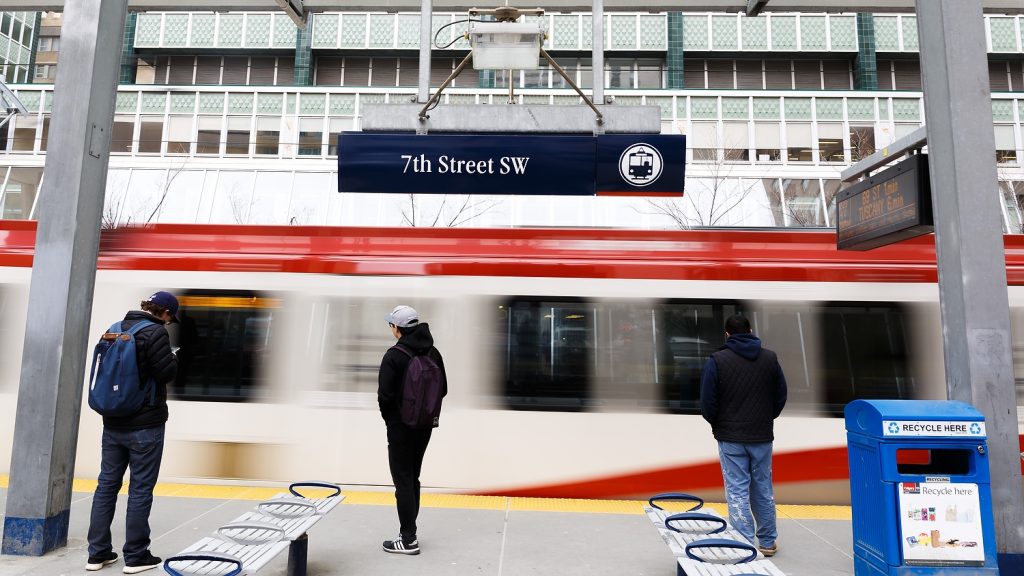
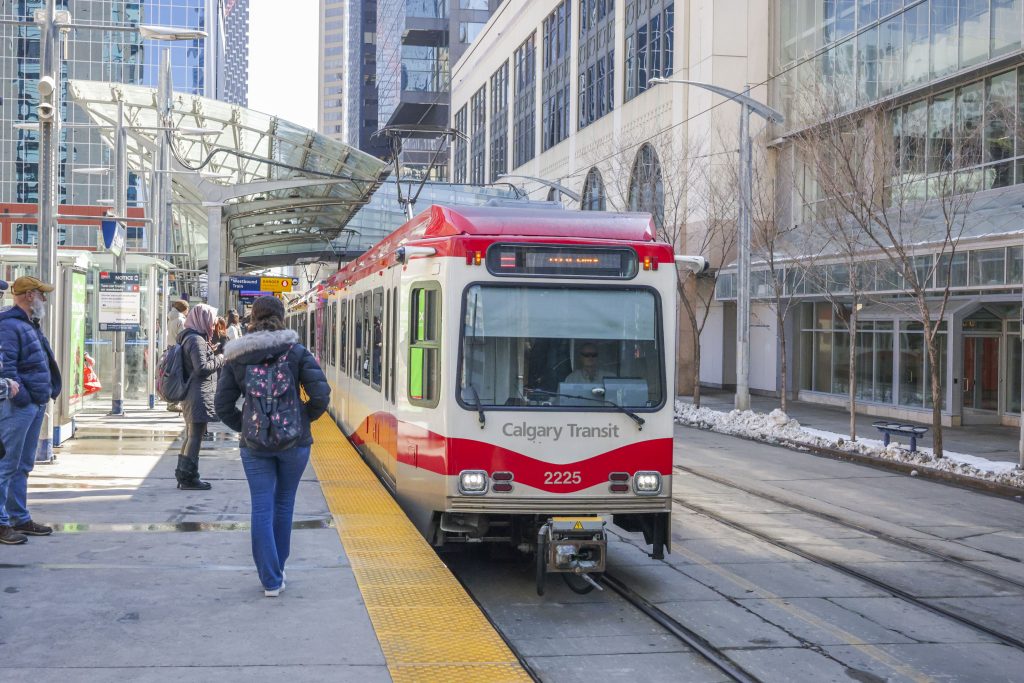
The southeast segment includes 16 kilometres of track from the future Shepard station to the Event Centre/Grand Central Station in the Beltline. The future downtown segment will connect the Green Line to the existing Red and Blue lines.
“This first phase of the Green Line gives residents in the southeast fast and easy access to the downtown core, and the rest of the transit network,” says Smith. “That will take cars of the streets, and less traffic means less gridlock.”
“With the first phase finishing right here at Shepard, that sets up the Green Line for extensions even further south to Seton so more communities can connect to it.”
Including the downtown portion, Phase 1 of the line will include over 17 kilometres of track, 12 stations, a maintenance and storage facility, and three Park and Ride lots.
The new line will eventually see the introduction of 28 new light rail vehicles.
“As Calgarians we’ve gone through a decade of debate, design, delays and now we are on construction day,” says Jeff Binks, president of advocacy group LRT on the Green. “The first kilometre track was always going to be the hardest and now there’s no looking back, it’s a great day for Calgary.”
The province has said planning from the city for the downtown segment is expected to begin shortly, with the design to be completed by 2026, leading to construction in 2027.
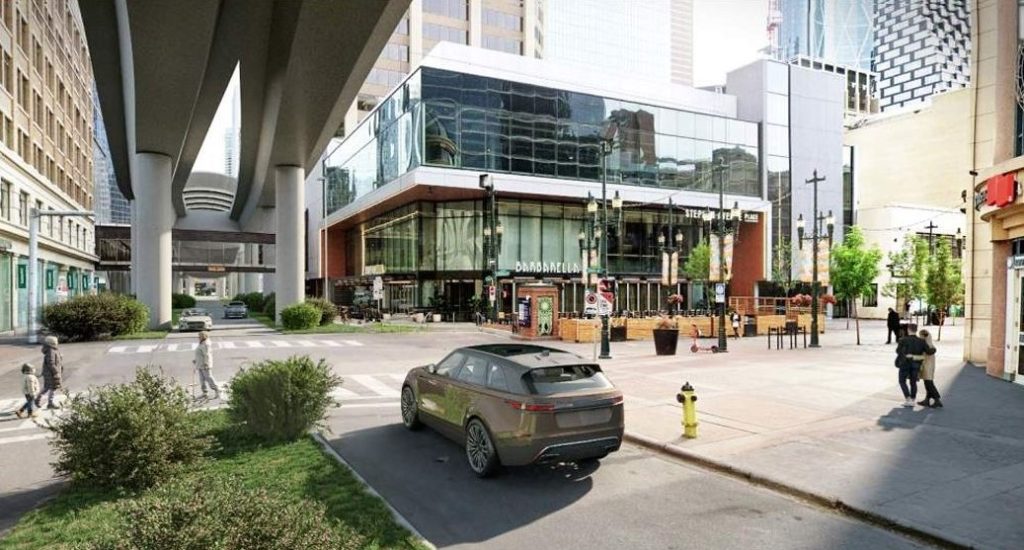
The city decided to go ahead with the project while design work for the downtown leg of the line gets underway, after council begrudgingly voted to move forward with the province’s revised alignment in January that would see the Green Line above and not underground.
The revised alignment from the province came about after they previously pulled their portion of funding for the line due to escalating costs.
“We are going to deliver this on-time and on budget, and if we get to a situation where we need to talk about overruns, we will do so as partners,” said Gondek on Thursday.
At the end of last year, city administration said the province’s revised alignment does not account for $1.3 billion in costs and risks, a price tag that would fall on Calgary to cover.
Six months later and the province’s tune on who would bare any cost overruns remains the same.
“Any costs overruns on the $6.2 billion would be the responsibility of the City of Calgary,” Dreeshen says.
In January, Calgary city council approved all of the recommendations from city administration on the province’s proposed realignment that includes an elevated downtown track that they believe will make the line cheaper.
City administration ultimately recommended a north-south elevated track along 2 Street SW through downtown and said they will conduct a full study on the proposed elevated alignment
Organizations representing real estate and business communities in Calgary’s downtown and Beltline wrote a letter to Smith and Transportation Minister Dreeshen in January expressing opposition to the elevated track through downtown.
With files from Lauryn Heintz