Noxious weeds taking over portions of Calgary Nose Hill Park alarms resident
Posted Aug 3, 2025 10:17 am.
There’s a weed issue in Nose Hill Park in Calgary, but it’s not the type of weed you might be thinking of.
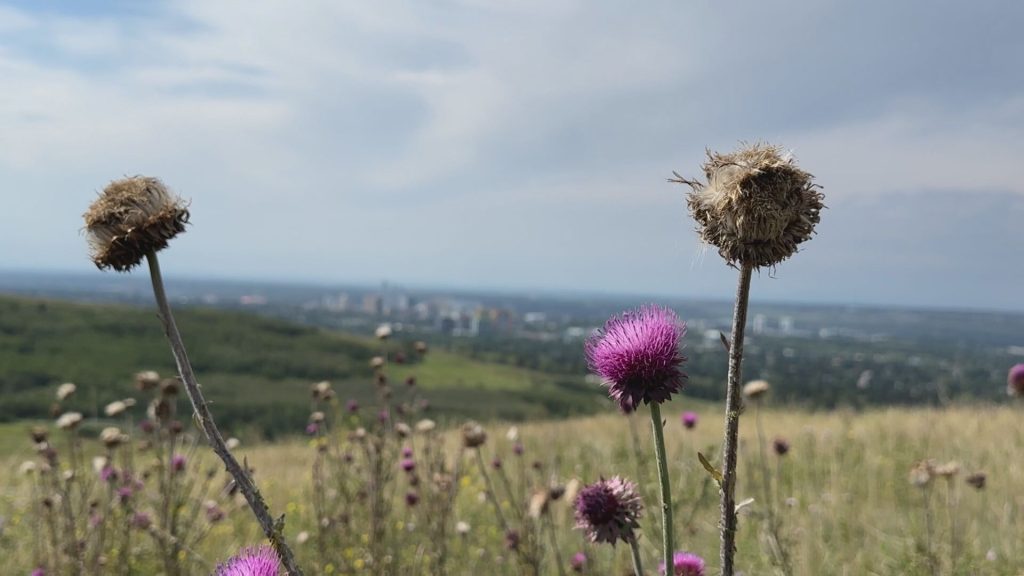
According to a Calgary resident, nodding thistle and Canada thistle, noxious weeds, have taken over portions of the park.
“As a regular user of this park, you can just see the dramatic changes that have happened in the last decade due to these weeds,” said Jill Armstrong.
“This is the prohibited noxious weed that is required to be removed.”
Armstrong says the weeds are supposed to be regulated through the Alberta Weed Control Act.
And she’s right, as the act says “a person shall control noxious weeds on land” they own, and prohibited noxious weeds under the act “must be destroyed” on land they own.
Nodding thistle is considered a prohibited noxious weed, while Canada thistle is a noxious weed. The province says noxious weeds can spread rapidly, cause severe crop losses and economic hardship, and that prohibited noxious weeds are typically not seen in Alberta.
“You can just see the dramatic changes that have happened in the last decade with these weeds,” Armstrong explains.
Her goal is to bring awareness to the problems these plants cause for wildlife in the park.
“There’s areas where I’ve literally seen that used to be covered with wildflowers are just completely–just overrun with Canada thistle now,” Armstrong said.
“My understanding was, over time, these weeds just outcompete the native plants, they outcompete the flowers, and that in turn affects the wildlife.”
The City of Calgary tells CityNews it has received feedback about nodding thistle in Nose Hill Park. It says mechanical control methods are being used, and planned volunteer pull events are scheduled for the coming month to deal with the weeds.
The city adds its planning to bring targeted goat grazing to help manage the Canada thistle population, with an announcement to be shared in the coming weeks. However, Armstrong says she’s not sure the goats are the best solution to managing the problem.
“Budgeting was cited as an issue for part of the problem as to why these weeds have spread. Financially, is that a realistic solution when you’re dealing with a park this size and a problem this big?” she said.
Armstrong says she is hoping that the city and other park-goers will come together to deal with this problem.
“We’re lucky to have a park like this. I’m hoping people will also become aware of it and invest in its care.”