Alberta to invoke notwithstanding clause to enforce laws impacting transgender youth
Posted Nov 18, 2025 11:26 am.
Last Updated Nov 18, 2025 7:14 pm.
In a historic move, Alberta is using the notwithstanding clause for the second time in less than a month. This time, on legislation impacting transgender youth that was previously blocked by the courts.
The UCP government introduced Bill 9 on Tuesday to use the Charter’s notwithstanding clause to prevent legal challenges to three laws impacting transgender and gender-diverse youth and adults.
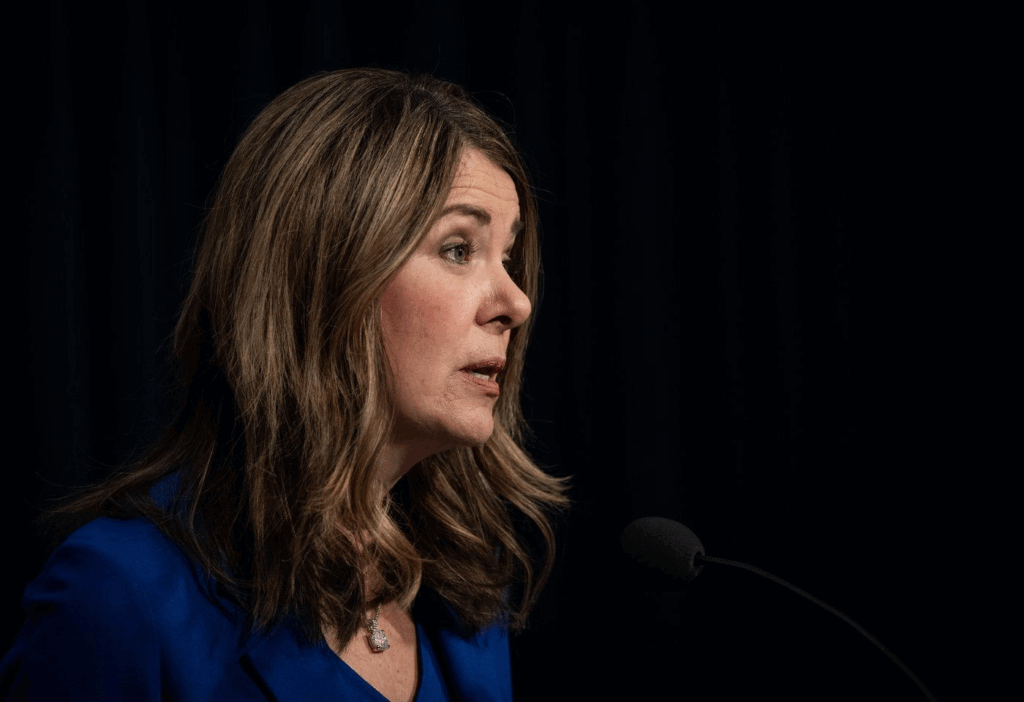
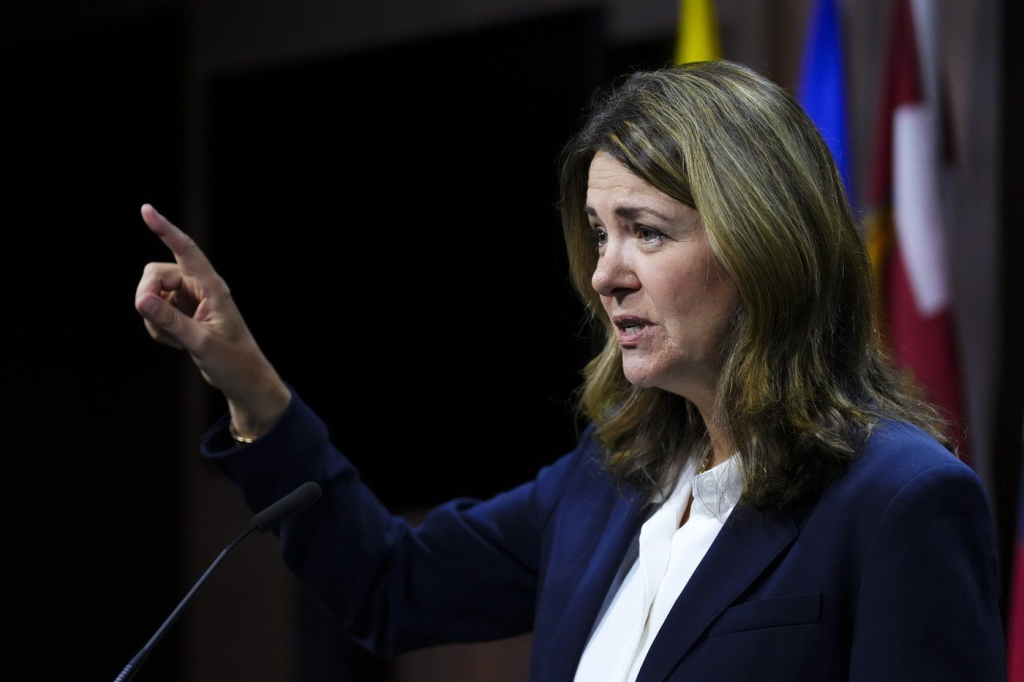
Premier Danielle Smith says the move is necessary to protect children’s health and well-being, which she added could be jeopardized if challenges to the laws are tied up in court for a long time.
“This government does not turn to the notwithstanding clause unless the stakes warrant it, and in this case, the stakes could not be higher,” Smith told reporters in a news conference Monday before the bill was introduced Tuesday.
The clause is being applied to three pieces of legislation, including Bill 26, which prohibits gender reassignment surgery for youth and bans supplying puberty blockers and hormone therapy for the purpose of gender reassignment to anyone under 16; Bill 27, which mandates schools get consent from parents when a student younger than 16 wants to be referred to using a different name or pronouns, and introduces an opt-in system for school sexual education; and lastly, Bill 29, which bans transgender girls from participating in amateur female sports.
The clause overrides several sections of the Canadian Charter of Rights and Freedoms, the Alberta Bill of Rights, and the Alberta Human Rights Act.
Officials were unable to provide details on an implementation timeline. However, the province confirmed youth currently on puberty blockers and other gender reassignment treatments will be able to continue to do so even after the legislation comes into effect.
The group Friends of Medicare warned Monday of the government’s intention to use the clause, calling on the UCP to remove Bill 9 and repeal what they call “anti-trans legislation.
“The decision to use the notwithstanding clause shows that the government knows full well that their legislation likely violates the constitutional rights of Albertans, but that they’re deciding to take extreme measures to keep it in place anyways,” said Chris Gallaway, executive director of Friends of Medicare. “Such a despicable use of the notwithstanding clause is a completely unacceptable.”
Friends of Medicare was one of many groups who spoke out in opposition to the passing of Bill 26 last year, saying it was discriminatory and a “political attack” on gender-affirming healthcare, which it says is already lacking in Alberta.
“Every Albertan deserves to feel safe and free of discrimination when accessing the health care that they need, and that care should be provided on the basis of the best medical evidence available, not politics or ideology,” said Gallaway.
Legal challenge
Last December, three LGBTQ2S+ advocacy organizations launched a legal challenge against Bill 26, arguing it violates gender-diverse young people’s section 7 right to security of the person, their section 12 right to be free from cruel and unusual treatment and their section 15 right to equality.
In June, an injunction was granted in the Court of King’s Bench against Bill 26. The judgement from Justice Allison Kuntz said the law raised serious issues that needed to be hashed out in court, and the injunction was needed to prevent “irreparable harm.”
At that time, Alberta said in a statement it was “considering all options” to defend their position, including an appeal.
Among the rumoured solution was the use of the notwithstanding clause, which was revealed in a leaked government memo obtained by The Canadian Press on Sept. 18.
This news was prior to the province using the notwithstanding clause in October to end the weeks long teachers strike that forced 51,000 educators back to work and into a previously rejected contract.
The Alberta Teachers’ Association and its members were threatened with hefty fines to deter non-compliance. After it was introduced, the ATA launched a legal challenge against the bill.
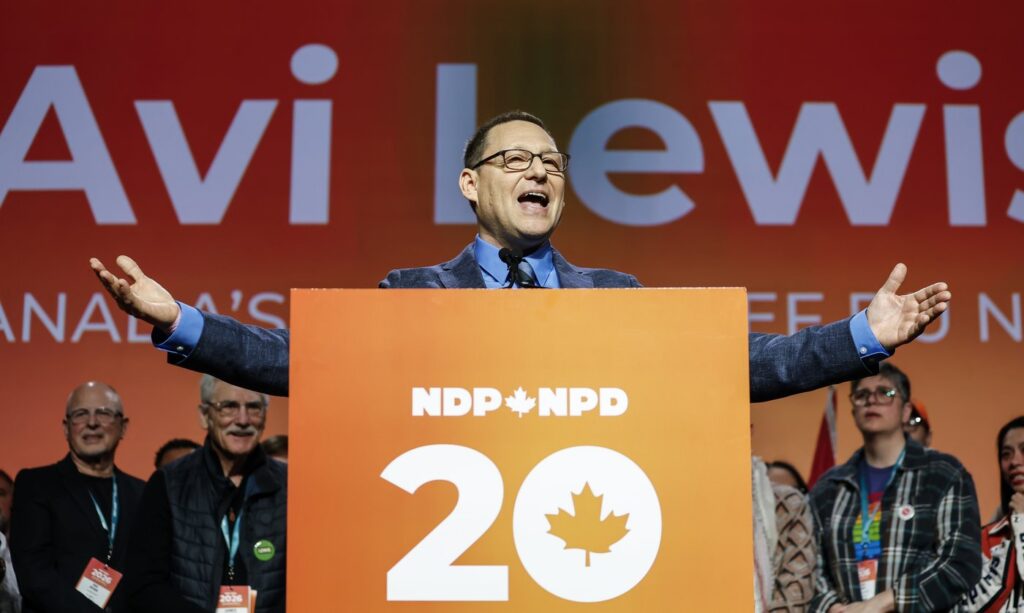
In response to the latest use of the notwithstanding clause, NDP leader Naheed Nenshi said the UCP government continues to attack the rights of Albertans.
“First, the notwithstanding clause was used against teachers to force them back to work with no negotiated contract and no legal option to appeal,” he said in a statement. “This was the first time in history an Alberta Premier knowingly passed a law she knew to be unconstitutional.”
Speaking alongside Smith on Monday, Justice Minister Mickey Amery dismissed concerns about the government’s repeated use of the clause, arguing that it has not been used frequently.
“At the end of the day, I’ll stand by this,” Amery said. “We’re prepared again to use every single legal and constitutional tool to make sure that the health and well-being of our children are protected.”
A Leger poll conducted earlier this month found more that half of respondents found Smith’s use of the notwithstanding clause inappropriate.
Rules enforcing female-born athletes already in effect in schools
Alberta’s Fairness and Safety in Sport Act came into law on Sept. 1, mandating that participation in female-only leagues, classes, or divisions be limited to student athletes whose sex recorded at birth is female.
To comply, both the Calgary Board of Education (CBE) and the Calgary Catholic School Division (CCSD) implemented policies which require parents of female student athletes age 12 to 18 to confirm their child was born female in a signed declaration.
“If a student athlete’s eligibility is challenged, the parent/guardian may be asked to provide a copy of the student athlete’s birth registration document,” the public school division said at the time. “Failure to provide this document may result in the student athlete being deemed ineligible to participate.”
The CCSD took similar steps.
Provincial tourism and sport officials say since the law came into effect, there have been no requests for the creation of a new sports league for transgender, gender diverse, or gender-non-conforming athletes.
According to 2021 census data from Statistics Canada, there are 7,305 transgender and 5,165 non-binary people in Alberta, making up 0.37 per cent of the population 15 years of age and older.
Nationally, the 2019 Canadian Health Survey on Children and Youth found that just 0.2 per cent of Canadian youth aged 12 to 17 are transgender.
With files from The Canadian Press