Eyes on the Arctic: How UCalgary’s sensors are safeguarding Canada’s north
Posted Nov 25, 2025 4:12 pm.
Last Updated Nov 25, 2025 6:36 pm.
A made-in-Calgary sensor network is giving Canada real-time insight into space weather over the Arctic, helping protect navigation systems and national security in the North.
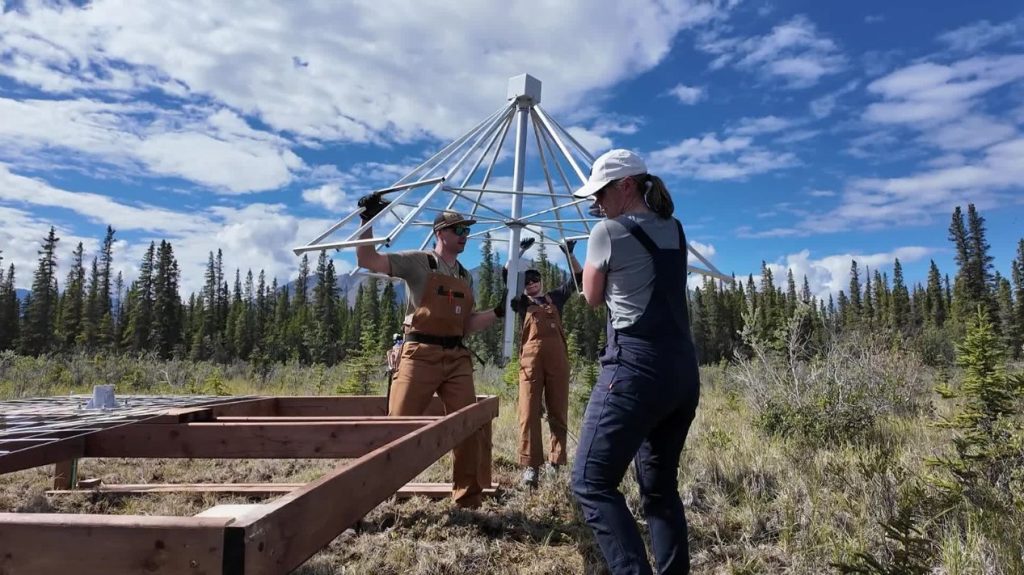
Researchers at the University of Calgary have developed the Space Weather Adaptive Network (SWAN), a system of 22 sensors spread across Canada and the northern United States.
These instruments constantly monitor radio waves from space, tracking activity high above the planet.
“This instrument is different in the way that it works, because it measures the very, very high energy Aurora,” said Dr. Emma Spanswick, associate professor in physics and astronomy at UCalgary. “So, things that would not necessarily be optical signatures. If you were to look at this type of Aurora from space, you would see X-rays coming off of the Earth.”
The data collected goes far beyond weather. It can identify vulnerabilities in everyday technologies such as GPS, smartphones, and satellite communications—alerting authorities to potential problems before they happen.
“When they’re in the field, they stream data directly to our systems at the University of Calgary,” explained Dr. Susan Skone, associate vice-president (research). “We have the ability to turn those observations around very quickly into our models.”
Skone added that the instruments can also detect human-made disruptions, including jamming, spoofing, and other forms of interference. That capability is particularly valuable for Canada’s northern security and military applications, where safeguarding against intentional adversarial effects is critical.
The system is entirely homegrown, developed over 40 years at UCalgary. From instruments to models, the technology ensures Canada maintains control over its data and innovations.
The second-generation network took four years to build, and researchers are already working on a third generation of sensors.
With eyes on the sky, built right here in Calgary, this network is giving Canada a new edge in protecting its North.