From siding to shingles: How Calgary homes are being built to resist hail damage
Posted Dec 4, 2025 4:28 pm.
Last Updated Dec 4, 2025 4:29 pm.
Builders in Alberta are racing to adapt to increasingly harsh weather, with two new projects in the Calgary region testing hail- and wind-resistant construction materials.
The goal is to create a blueprint for storm-ready housing across Canada.
Last August, a devastating hailstorm swept through Calgary, causing nearly $2.8 billion in insured damage — the second-costliest weather event in Canadian history, according to the Insurance Bureau of Canada. That disaster has pushed builders and insurers to rethink how homes are constructed.
Chris Williams, president of Avalon Master Builder, says the pilot projects are focusing on materials designed to withstand extreme conditions.
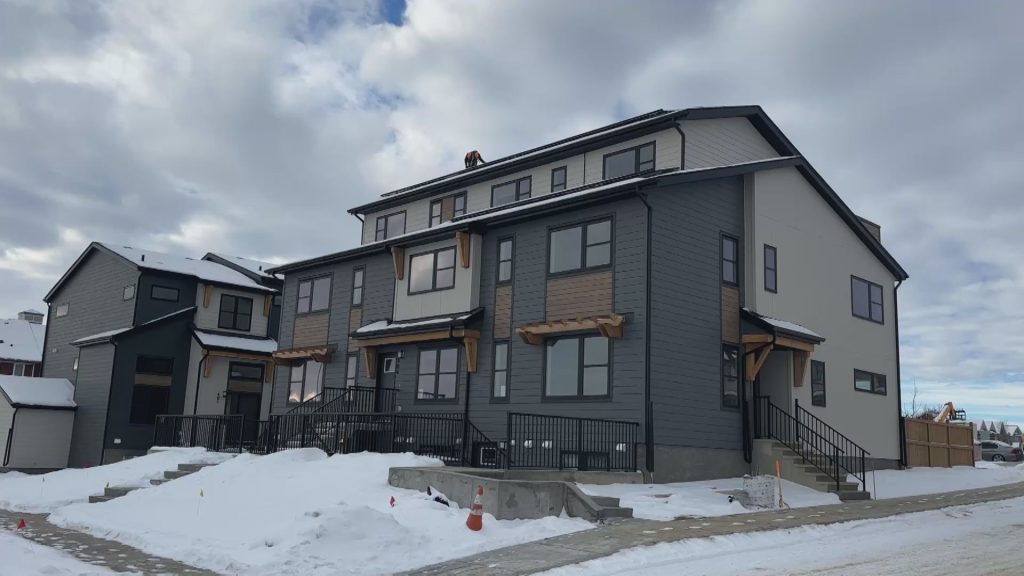
“The products that you can see on the outside of the homes are the siding and the shingles,” Williams explained. “We’re using Ico Nordic shingles, which are class four hail resistant, and LP SmartSide, which is also hail resistant.
“But behind that, there’s quite a bit that goes on as well — from nailing patterns and underlayment to bracing and how we tie the roof down to the wall.”
Insurance provider Aviva Canada is investing $400,000 into two climate-resilient builds.
Zen Belmont, a multi-unit development in southwest Calgary, is testing hail and wind-resistant upgrades in partnership with the Institute for Catastrophic Loss Reduction and the Canadian Home Builders’ Association. In Chestermere, Habitat for Humanity is constructing a 24-unit affordable housing project using hail-resistant materials.
Shauna Mamini, assistant vice president of property portfolio and exposure management at Aviva Canada, says the projects are meant to prove that resilient housing is within reach.
“What we want out of these pilot projects is to show that it is affordable, it is achievable for your average person to have a resilient home built for the weather they live beside every day,” Mamini said.
For homeowners, the choice of hail-resistant materials could also mean lower insurance costs.
One Calgary resident told CityNews they “would pick the hail-resistant because of insurance cost. It doesn’t matter to me if the house costs more because insurance keeps going up and up.”
Others remain skeptical, noting that hail damage is rare.
“I just wouldn’t choose that type of thing just for a price point. And I’ve only had hail damage once in 20 years,” said one resident.
Williams adds that upgrades aren’t limited to new builds. Existing homes damaged by hail or wind can be retrofitted with resilient siding and shingles, often with support from insurers.
While hail-resistant siding adds some cost, Williams estimates it’s less than five per cent for multi-family units. With Zen Belmont scheduled for completion in summer 2026, builders and insurers hope these projects will demonstrate that climate-ready homes are both practical and achievable.