Time was against Calgary to be the 2026 Winter Games host
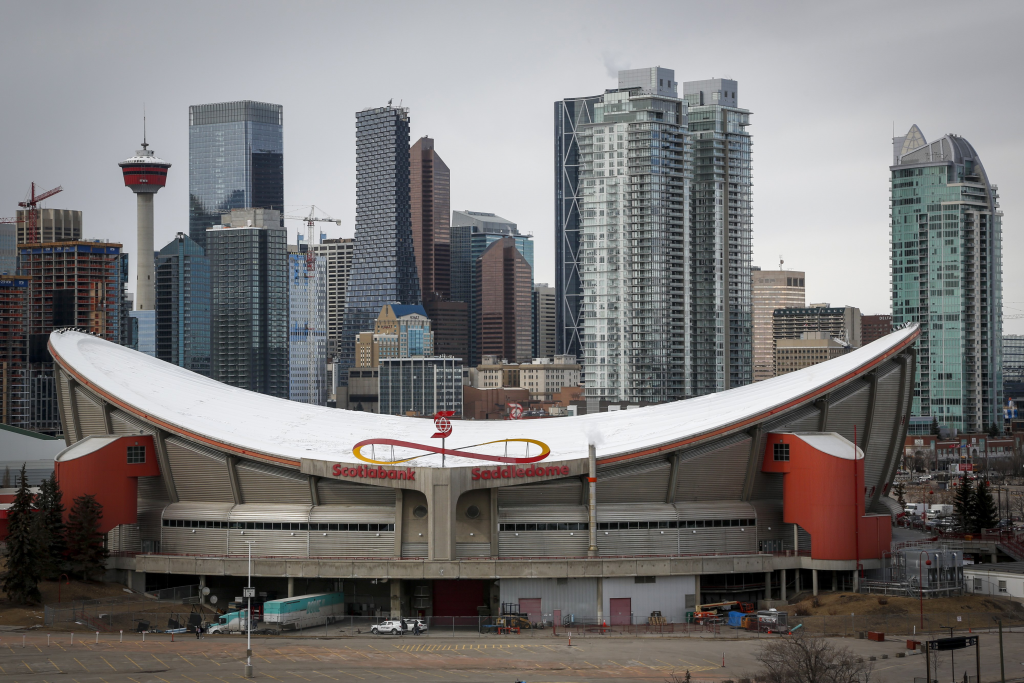
Posted Feb 6, 2026 7:21 am.
Italy’s Winter Games could have been Canada’s.
The International Olympic Committee was more than willing eight years ago to give the 2026 Olympic and Paralympic Winter Games to Calgary and Canmore, Alta. The IOC even put 2030 forth as an option, too.
The 1988 Olympic Games in Calgary and Canmore still make money via interest on endowment funds.
While Calgary deliberated on a 2026 bid, the country wasn’t far removed from the 2010 Winter Olympic and Paralympic Games in Vancouver and Whistler, B.C., which broke even financially and where the host team won a record 14 gold medals.
So why didn’t it happen in Calgary for 2026?
The requirement by Alberta’s NDP government at the time to hold a plebiscite, combined with government foot-dragging on financing, made a short runway for Calgarians to digest and trust what bidding for another Winter Games meant.
The combined contribution of the federal, provincial and municipal governments wasn’t clear until less than two weeks before the Nov. 13, 2018 plebiscite, when just under 40 per cent of eligible voters cast a ballot — and 56 per cent cast a dissenting one.
“The fundamental flaw was we ran out of time,” said Scott Hutcheson, a commercial real estate mogul and former national team alpine skier who was the bid chair.
“It was unfair to Calgarians that we didn’t have our funding model until a few days before the vote.”
City council chose the date for the plebiscite. The government funding agreement that was supposed to be ready for public consumption mid-August wasn’t until Oct. 31, after some plebiscite votes were already cast via mail-in ballot.
“We had two weeks to convince the community that we were going to get a return on our investment, so it was really difficult,” said Mary Moran, who was the bid’s chief executive officer.
“We’d just produced the amazing video that would have won the hearts of Calgarians, Albertans and Canadians that was finished the day of the plebiscite. Imagine if we had until January or February, we would have way better opportunities to engage.”
The bid
The IOC was embarking on new bid criteria. Instead of “build, build, build” it was “reduce, reuse, recycle” to make bidding more attractive and affordable for cities, which weren’t lining up to host any more.
The 2026 bid proposal for Calgary and Canmore featured a $500-million revival of the ’88 facilities, the sprucing up of McMahon Stadium and the Saddledome, and the construction of an indoor field house, a 5,000-seat ice arena and 600 or more affordable housing units.
The total cost of hosting the Games was estimated at $5.1 billion. The Canadian government committed $1.45 billion, and the Alberta government $700 million, conditional on holding the plebiscite. Canmore’s contribution was $3 million.
The city’s contribution was $390 million, plus a $150-million credit for downtown development already planned that would have doubled as Games preparation.
The city is currently spending $515 million on Scotia Place, which is scheduled to open in 2027 and replace the Saddledome as the new home of the Calgary Flames.
Games revenues — sponsorship, ticketing, licensing and merchandising — plus a $1.2 billion contribution from the IOC in cash and services, were projected to cover the remaining $2.23-billion cost of hosting a 2026 Games.
“We would have got $25 billion of economic impact,” Hutcheson said.
The vibe
A new fractious city council had just been elected in 2017. Nervous councillors nearly scuttled a bid in an October confidence vote. Rachel Notley’s NDP government was preoccupied with the looming 2019 provincial election.
Mayor Naheed Nenshi eventually supported a bid.
“He gave the Olympic support too late. I didn’t have him until very, very close to the end. ” Hutcheson said. “The premier dragged her feet. She didn’t help us get the funding model done until it was too late. The feds were our best partner.”
Now the leader of Alberta’s NDP opposition, Nenshi was unavailable for an interview about Calgary’s decision not to pursue a 2026 Olympic bid, his spokesman said.
Calgarians had a hard time believing the security bill would be $495 million after the $900 million of Vancouver and Whistler, even though Calgary doesn’t have an ocean harbour to defend.
“I’m very sympathetic to the psyche of Calgary at that time when they had to make that decision because we were in the worst economic situation in our history with $23 (a barrel) oil, 40 per cent office space vacancy and 11 per cent unemployment,” Moran said. “There was this fearmongering going on around that ‘it’s going to increase our taxes.’
“We built the most sophisticated budget in the history of a bidding organization because we wanted to mitigate the risk for our community.”
No government offered to be a guarantor against debt, which B.C.’s provincial government did for 2010. Calgary’s bid corporation built $1.1 billion in contingency funds into its hosting plan.
Calgary’s bid exploration was also under the intense microscope of social media.
“It’s very easy to create a belief that things are going to be too expensive,” said John Furlong, who led B.C’s Winter Games and lent his expertise to Calgary’s 2026 bid corporation.
“I do think that this was a big miss for us because when you think of where we are today, the state of the country, what’s going on internationally, this event qualifies very easily as a nation-building event. It did in 1988, and it did in 2010. These are the types of events that are transformative for a country.”
The aftermath
Within weeks of the plebiscite, the ’88 sliding track for luge, bobsled and skeleton at Canada Olympic Park shuttered and hasn’t reopened.
The Olympic Oval, which offers sport to the public, the University of Calgary and high-performance athletes, is on the verge of losing its ability to make ice because of brine leaks in its floor.
WinSport, which oversees Canada Olympic Park and the endowment funds, and the Oval still host international sport, but there’s been a decline in the number of World Cups in the city and in the area.
“We’ve held more international and world-level events in the Bow Valley corridor than any other jurisdiction in Canada, and we gave that up,” Moran said.
The Canmore Nordic Centre, a cross-country ski and biathlon facility, is in a provincial park. A $27.1-million expansion paid for by the province was recently completed. It’s in the best shape of the ’88 venues.
Interest on the endowment fund — worth about $120 million this year — helps pay for operations at COP, the Oval and a training centre at the Nordic Centre. But it can’t turn back time on 38-year-old construction.
“The model from the ’88 Olympics… was phenomenally successful, but it was done. It needed a renewal,” said WinSport chief executive officer Barry Heck. “To undertake a renewal of that magnitude, there’s only one silver bullet, and that is a major Games.
“We had to turn to a Plan B. Now, we’ve successfully pieced some of it together. What we weren’t able to do was save the sliding track. The Oval is on life support.”
An Olympic bid includes the requirement to also host the Paralympic Games, which wasn’t the case in 1988.
“A lot of people go through their lives without looking at life with an accessibility lens,” said Ryan Straschnitzki, who was paralyzed from the chest down in 2018 when a semi-trailer crashed into his Humboldt Broncos junior hockey team’s bus.
“Having the Paralympics in Calgary would have been a cool opportunity to not only promote these amazing athletes and how cool the Paralympics are, but also to promote accessibility.”
The 26-year-old, who has played Para hockey and now plays wheelchair basketball, is certified through the Rick Hansen Foundation on a rating system that measures the physical access of buildings and other sites.
“When it comes to how Calgary has done with accessibility in general, depends who you ask,” Straschnitzki said. “I can navigate pretty well in a wheelchair, but there are a lot of businesses that have been around for a while that are inaccessible.”
The future
The next Winter Games are in the French Alps (2030) and Salt Lake City (2034). Switzerland put its hand up for 2038.
Los Angeles hosts the 2028 Summer Games, followed by Brisbane, Australia, in 2032.
“It means that the next clearly available Games are the summer of ’36 and the winter are ’40, and that’s a long time in our planning cycle,” said Canadian Olympic Committee chief executive officer Dave Shoemaker.
“We continue to have discussions with the City of Calgary, City of Vancouver, City of Montreal and other places about their longer-term aspirations for the Olympic Games.”
Current Calgary mayor Jeromy Farkas, who voted against pursuing a 2026 bid when he was a councillor, said “Calgarians made the right choice to choose not to opt for the Olympics this time around. There’s significant challenges with the business case of that 2026 bid. Significant details were lacking in terms of the finances, security costs.
“But I would say, it’s not out of the question for us to consider a future bid at some point. We think about Alberta’s and Calgary’s Olympic legacy, the fact that we need to renew our Olympic Oval, other training facilities. There’s a strong business case for reinvesting and doubling down on our Olympic legacy and the challenge is still going to remain some of the conduct of the international organizing committees, the sporting federations, as well as the cost for security.”
Catriona Le May Doan, who won two Olympic gold speedskating medals in her career while training at Calgary’s Oval, says she heads to the Milan Cortina Winter Olympics to do corporate work with mixed feelings.
“It’s hard for many people going into these Games because we just keep thinking what could have been, which is not the right way to look at it, but it’s hard not to,” she said.
— With files from Dayne Patterson in Calgary.