Here are the referendum questions to be put to Albertans later this year

Posted Feb 19, 2026 6:45 pm.
Last Updated Feb 20, 2026 11:57 pm.
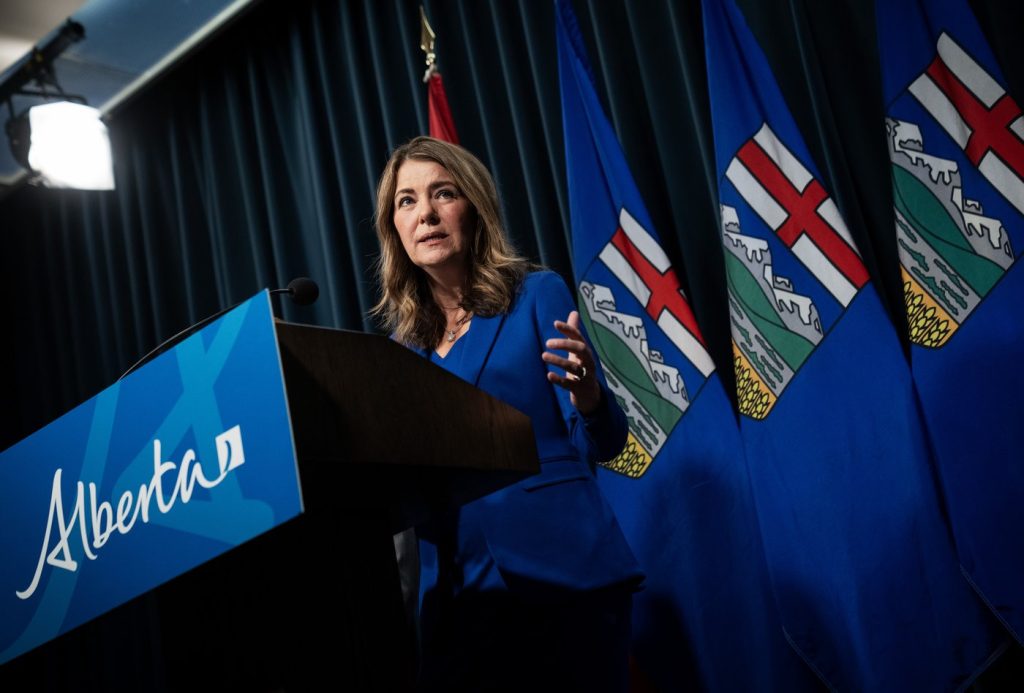
Premier Danielle Smith announced a provincial referendum later this year that will ask Albertans to weigh in on changes to immigration policy and potential constitutional reforms.
Smith unveiled the plan for the Oct. 19 referendum during a televised address on Thursday night, where she discussed the province’s deepening deficit ahead of the budget release next week.
The ballot in October will include questions on whether Alberta should take increased control over immigration, restrict provincially funded programs to citizens, permanent residents and those with Alberta‑approved status, impose a 12‑month residency requirement for non‑permanent residents seeking social supports, charge fees for their use of health and education systems, and require proof of citizenship to vote.
Albertans will also be asked whether the province should work with other provinces to pursue constitutional amendments, including abolishing the Senate, allowing provinces to appoint their own superior court judges, opting out of federal programs without losing funding, and giving provincial laws priority over federal ones in areas of shared jurisdiction.
Here is a full list of the “yes or no” referendum questions that will be put to Albertans next fall:
Non-constitutional questions
- Do you support the Government of Alberta taking increased control over immigration for the purposes of decreasing immigration to more sustainable levels, prioritizing economic migration and giving Albertans first priority on new employment opportunities?
- Do you support the Government of Alberta introducing a law mandating that only Canadian citizens, permanent residents and individuals with an Alberta-approved immigration status will be eligible for provincially-funded programs, such as health care, education and other social services?
- Assuming that all Canadian citizens and permanent residents continue to qualify for social support programs as they do now, do you support the Government of Alberta introducing a law requiring all individuals with a non-permanent legal immigration status to reside in Alberta for at least 12 months before qualifying for any provincially-funded social support programs?
- Assuming that all Canadian citizens and permanent residents continue to qualify for public health care and education as they do now, do you support the Government of Alberta charging a reasonable fee or premium to individuals with a non-permanent immigration status living in Alberta for their and their family’s use of the healthcare and education systems?
- Do you support the Government of Alberta introducing a law requiring individuals to provide proof of citizenship, such as a passport, birth certificate, or citizenship card, to vote in an Alberta provincial election?
Constitutional questions
- Do you support the Government of Alberta working with the governments of other willing provinces to amend the Canadian Constitution to have provincial governments, and not the federal government, select the justices appointed to provincial King’s Bench and Appeal courts?
- Do you support the Government of Alberta working with the governments of other willing provinces to amend the Canadian Constitution to abolish the unelected federal Senate?
- Do you support the Government of Alberta working with the governments of other willing provinces to amend the Canadian Constitution to allow provinces to opt out of federal programs that intrude on provincial jurisdiction such as health care, education, and social services, without a province losing any of the associated federal funding for use in its social programs?
- Do you support the Government of Alberta working with the governments of other willing provinces to amend the Canadian Constitution to better protect provincial rights from federal interference by giving a province’s laws dealing with provincial or shared areas of constitutional jurisdiction priority over federal laws when the province’s laws and federal laws conflict