Water woes: How could Calgary see two catastrophic bursts to its largest feeder main?
Posted Feb 21, 2026 11:44 am.
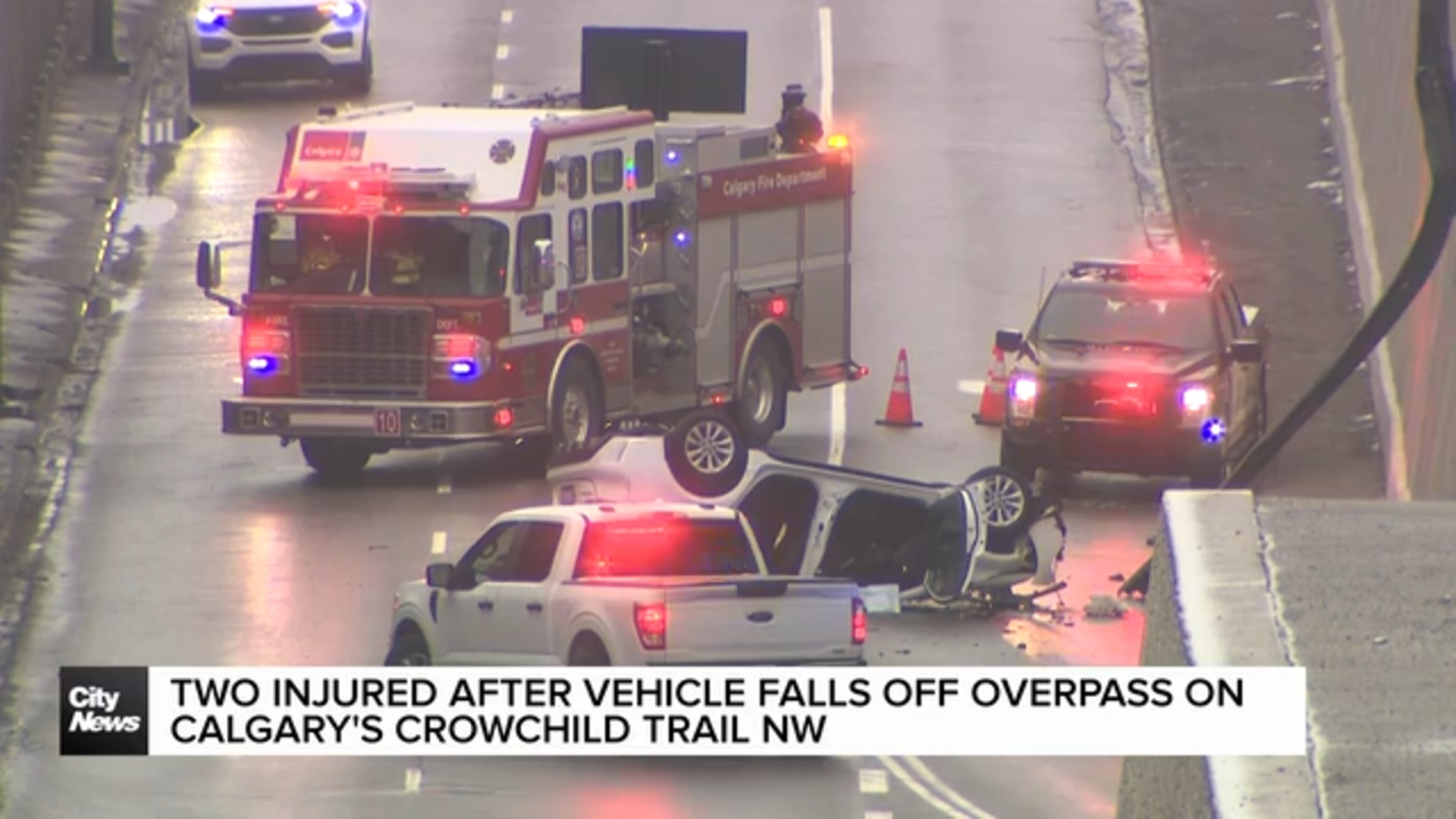
Water bursts through a portion of 16 Avenue NW in Calgary on Dec. 30, 2025, trapping people in their vehicles while a section of the Trans-Canada Highway turns into a river.
That night, 13 people were rescued from their vehicles by first responders. Videos posted to social media show a family with young children huddled on the roof of their vehicle while water pooled around them.
Eric Wisniewski and his wife were caught in the rush, saying that “the water started filling in the car. It was at the seats within a minute.”
The next morning, daylight showed the extent of the damage. Large chunks of pavement strewn about, vehicles left abandoned.
It was then that city officials confirmed the worst: Another catastrophic break to the same feeder main that burst in June 2024.
It was a scene all too familiar to Calgarians who faced months of water restrictions in 2024 when the Bearspaw South Feeder Main burst for the first time.
It’s Calgary’s largest water main that carries 60 per cent of the city’s treated water. Thirty different sections of that pipe were repaired following the burst, and monitoring equipment was installed to ensure the city receives ample warning if pipe segments are weakening.
But on Dec. 30, the city says they had no warning. In a flash, the city’s most crucial piece of infrastructure failed, again.
It prompted questions — how could a catastrophic break happen twice in the span of a year and a half? The answer was something city officials didn’t know.
“We don’t know why this pipe broke,” said Michael Thompson, the city’s General Manager of Infrastructure Services. “We need to figure that out, and we need to look at other sections of the pipe that we were monitoring and find out what action we need to take.”
The fallout was swift. Many online blamed former mayors and council members, with Alberta Premier Danielle Smith joining in, taking a jab at three-term Calgary mayor and current leader of the Alberta NDP, Naheed Nenshi.
“After the (2013) floods for 10 years, they didn’t bother to do any investigation on the water main,” she said during a press conference in the following days. “You have to ask the question, who was the mayor after the floods of 2013 until he decided to retire? That was Naheed Nenshi.”
In response, the former mayor called that claim “garbage,” saying no water mains broke during his tenure, and before the Bearspaw breaks, the last burst was to the McKnight Feeder Main back in 2004.
With more accusations than answers, all eyes were on the findings of a soon-to-be-released independent review into the previous water main break, initiated under the leadership of former Mayor Jyoti Gondek. With mounting pressure from politicians and the public, the findings were made public a week later.
“I believe you would have averted having this situation of water curtailment,” explained the panel chair, retired ATCO CEO Siegfried Kiefer. “There were several opportunities over the last couple of decades to build in resiliency and redundancy associated with that Bearspaw Feeder Main.”
The 86-page report pointed to systemic gaps in the city’s risk and asset planning, as well as issues in governance and management. Those issues were intensified in the face of Calgary’s rapidly growing population and, like many municipalities across the country, underinvestment in aging infrastructure. Put together, it was a combination that prompted the panel members to advise a drastic overhaul within city hall.
The review revealed “inspection recommendations made in 2017, 2020, and 2022 were deferred or redirected,” with a scathing review of upper management, citing “unclear accountability and a culture of risk tolerance and decision deferral.” It also found that because the city’s water utility is split across multiple departments, the first person who receives all reports on water is the city’s chief administrative officer, David Duckworth.
The response from Mayor Jeromy Farkas and council was swift, voting in favour of moving forward on all of the panel’s recommendations. During a regularly scheduled review of the metrics of the CAO’s job performance, mandated regular updates.
“It’s very clear that past councils played it way too loose in terms of providing firm direction with our city managers as well as holding them accountable for results,” said Farkas.
“Our city council will be doing things very differently.”
No blame for elected officials
One of the more damning pieces found in the review was that no council or mayor could have prevented what happened. The review found “reporting to council was periodic and high-level,” and that “many critical decisions were never surfaced to council.”
“We didn’t know,” explained long-term councillor Andre Chabot, who has sat in council chambers since 2005, excluding a single term in the late 2010s.
“If council had been made aware of the criticality of this pipe, they certainly would have addressed it at the time.”
Adding that because of the way the pipe was constructed, it was incredibly difficult to do a rigorous inspection, as the industry-standard tests didn’t raise alarm bells.
“I don’t even think that even administration had a full understanding of how critical this piece of infrastructure was because even through the electromagnetic testing, the independent report even indicated that electromagnetic testing did not actually reveal where some of the wires had broken,” says Chabot.
“It sort of gave a false positive insofar as some of the areas where we ultimately decided we needed to do repairs. So it was really hard, especially with the older technology, to be able to assess whether or not the pipe was at risk of failure.”
Calgary’s 2004 feeder main burst
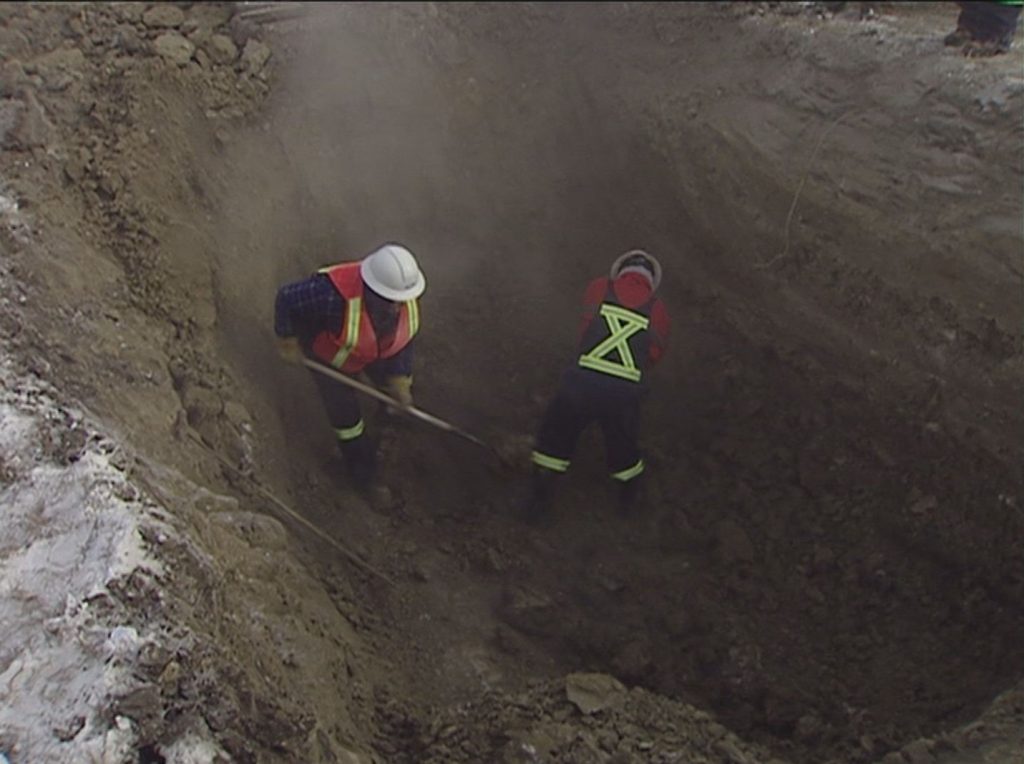
In 2004, Calgary’s McKnight Feeder Main burst. Subsequent reviews blamed highly corrosive soil conditions, with the culprit being sulphates that broke down the outer mortar of the pipe.
This break is highlighted in the 86-page independent review as one of the first signs that the Bearspaw South Feeder Main would eventually fail.
“It was close to home for me because I live in the northeast,” explains Chabot, who would become city councillor for the area in the following year.
“They did extensive analysis of the ground and its chemical composition in close proximity to the pipe elsewhere in the city. So I think the city did its due diligence at the time to determine whether or not there was a likelihood of failure in other areas.”
The Independent panel, however, suggests the city was looking at the wrong conclusion. Instead of looking at a specific chemical, the focus should have been on the pipe’s material itself and how it was susceptible to corrosion when the soil is “chemically aggressive.”
Both the Bearspaw and McKnight feeder mains were made of the same material — prestressed concrete cylinder pipe, or PCCP. A thin steel cylinder is lined with cement, and high-tension wires are wrapped around the pipe with a mortar casing on the outside.
The pipes were expected to have a 100-year lifespan, but cities across the country are finding out that isn’t the case.
Pipe failures raise questions as Calgary leads in water pipe inspections
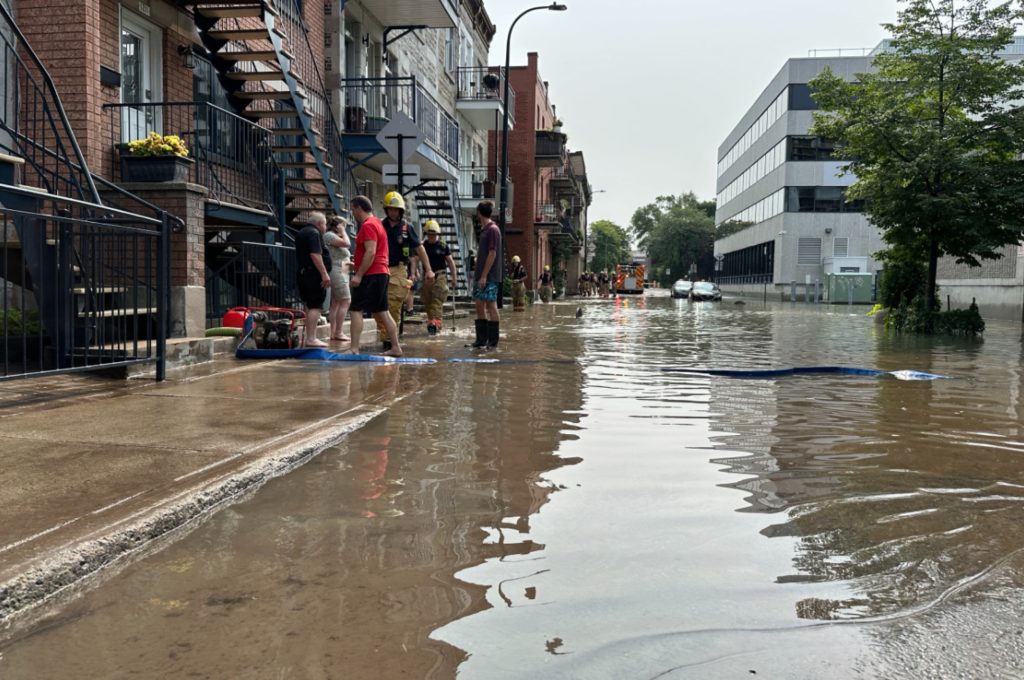
Just months after Calgary’s initial break in 2024, Montreal fell victim to a PCCP pipe failure. City officials said the pipe had suffered corrosion over the years but believed they had more time before repairs were needed.
The numerous failures of this type of pipe have left many in the industry scratching their heads. Particularly those in Calgary, who say this city has led the way in water pipe inspections.
“The City of Calgary has been viewed by other municipalities, not just in Canada, but North America, as leading in this initiative, as being proactive since about 20 years ago, really looking at the leakage within the pipes and how they can minimize that,” says Kerry Black, a Canada Research Chair and associate professor of Civil Engineering with the University of Calgary.
“That’s why it’s such a wake-up call for other cities and municipalities because if it can happen here, where we were really proactive in doing the best as we could as a city to prioritize our infrastructure, it can really happen anywhere.”
That’s something a former senior infrastructure engineer with the City of Calgary echoes.
“The (independent) panel gave the public the impression that the city had been aware that these pipes can break since 20 years ago, and that we’ve sort of neglected the risk for the whole 20 years, when in fact we kind of sprung into action with one of the most ambitious inspection programs in the world,” says Roy Brander.
Brander spent three decades working on the city’s water pipes and helping develop inspection programs until his retirement in 2016. Those inspections have since been used worldwide.
“We were very proud of it,” he explains. “It makes me frustrated when the pipe that was due for inspection four months later broke at just the worst time, making us look bad and look as if we hadn’t been doing anything when we’d been doing nearly everything possible.”
He says he and his team replaced at least five different sections of pipe that he believes would have broken if left unattended.
“If we’d inspected, we wouldn’t have found it.”
Despite known issues with PCCP pipes, Brander says the break to the Bearspaw South Feeder Main was caused by something not typically seen — instead of sulphate corrosion like previous breaks, it was high levels of chloride, painting a concerning picture.
“You want to hear the difference between this beak and all the breaks that came before it? It’s hugely significant, and I’ll just tell you flatly, I’m scared,” he says.
“I’m scared because this break was not caused by the same kind of corrosion that caused the previous breaks.”
He says crews were able to control the situation “very well” with sulphates after finding the broken wires with their inspection tools and replacing the main early.
“The blame for the 2024 breaks was laid upon us not having inspected. We now know that if we’d inspected, we wouldn’t have found it because the big break that happened at the end of December 2025 happened in an area that was heavily inspected,” says Brander.
“I looked at those inspection reports; they’re online — anybody can download them. Maybe not everybody can read them, but I can. There were simply almost no wire breaks in the area in front of Rona, where the main just exploded.”
While the City of Calgary was relying on hearing wire snaps in the pipe, chlorides in the soil were eating at the wires. It didn’t cause them to snap, but rendered them brittle and weak — something that doesn’t show up in inspections.

Chloride is common in soil; it’s found in the salt used to clear roads in the winter. What was uncommon, though, Brander says, is high levels along riverbeds because the river would wash it away. He says we still don’t know exactly what caused the chloride levels to be so high that they degraded the pipe to the point of failure.
“None of the tests showed staggeringly high levels of chlorides. Either we missed them 14 years ago, we only took five tests in six kilometres, maybe we happened to spot all the places that did not have chlorides by sheer bad luck, or a hell of a lot of road salt has been dumped on that main in the last 10 years,” he says.
According to Brander, that’s something the independent panel didn’t look into.
“They didn’t talk to the roads department at all. They didn’t ask if they’d changed their road salting protocols or changed the amounts they put on,” he says.
“When I looked at the forensics report that was turned in, the same one with all the inspection data, it mentioned clearly that the parts that broke in 2024 had far more breaks in the main once you removed it than were ever visible in the inspections.”
He hopes we don’t see additional pipe failures due to that type of corrosion, and that the industry can develop reliable, cost-effective inspection tools to check when the wire’s integrity has been compromised but hasn’t snapped.
Meanwhile, as city council moves forward with the panel’s recommendations on straightening up affairs inside city hall, those in the industry are calling for their perspectives to be included when big decisions are made in council chambers.
It’s something the panel’s report says has been lacking in the past.
“The report helps us make a path forward, but it’s not altogether different from a lot of the recommendations and governance pieces that have been discussed already,” says Black. “If these same recommendations arrived on the mayor’s doorstep two years ago, before the pipe had broken, I don’t think you’d see the same level of response because you don’t have pubic outcry and a push to do it.”
More funding needed nationwide to repair water infrastructure
With the Bearspaw South Feeder Main still in service, the reliability of Calgary’s drinking water remains at risk. Mayor Farkas and other members of city administration have described the pipe as “terminally ill.”
The construction of a twinned replacement line has been drastically accelerated and is now expected to be in service as of Dec. 1, 2026, three years sooner than originally planned.
In the meantime, the City of Calgary is prepared for another break if or when it happens. Sandbags have been stacked along a portion of the Bow River. Sections of flood mitigation have been removed. The city also announced more water restrictions starting on March 9 as crews reinforce sections of the pipe.
“We’ve been lucky with these water main (breaks),” says Brander. “If the break at Rona had been just a little bit worse, there could have been traffic accidents, and people could’ve died.”
“There’s actual risks to life and limb even in a water system. Not as severe as they are in a medical system, but you are eventually putting risk of infrastructure failure against human life.”
With the possibility of serious consequences, there’s hope Calgary’s dual breaks along the Trans Canada highway could act as a wakeup call for elected officials nationwide.
“There’s always a focus on exciting, ribbon-cutting projects because that’s what gets people to the door,” says Black. “We know if you invest in core infrastructure, so that’s your water, wastewater, things like that, roads. That it creates jobs. It’s an economic boom; it increases GDP. So it has a similar effect that building new projects does.”
She’s calling on the federal and provincial governments to increase investment in repairing existing lines to curb the national issue of deteriorating infrastructure.
“You have a 300-billion-dollar infrastructure deficit, plus, in Canada. Can’t take that on at a municipal level, we need provinces and the federal government with a larger tax base to help us bear that cost,” says Black.
She adds that despite two catastrophic bursts, she doesn’t believe Calgary’s reputation has changed. In fact, she says other municipalities are looking to Calgary, once again, to find a path forward.
“Instead of looking at Calgary and going ‘oh wow that happened over there, we’re safe,’ everyone’s looking internally and going ‘goodness if that can happen in Calgary, we really need to pull up our socks here and figure out if we’re ready for something like this,” she says.
“They’re going to be in similar positions moving forward with their aging infrastructure.”
With two catastrophic breaks to the city’s most crucial water line in the span of a year and a half, city crews and Calgarians will be hoping we don’t see additional breaks before work is set to be completed on a twinned replacement line this December.