UCalgary to analyze secession impact in Alberta; panel to review
Posted Jun 12, 2026 12:05 pm.
Last Updated Jun 13, 2026 9:44 am.
The University of Calgary’s School of Public Policy has been picked to analyze the economic impact of Alberta seceding from Canada, the provincial government said Friday.
The province says the independent analysis by members of the school is meant to inform Albertans ahead of the referendum on Oct. 19.
The report is expected to have estimated transition costs, economic impacts, potential savings, and risks that could result if the province pursued this constitutional change.
“The University of Calgary’s School of Public Policy is pleased to conduct this analysis to provide a better understanding of the estimated transition costs, economic effects, potential benefits and other economic implications of secession that would impact Albertans,” said UCalgary School of Public Policy director Martha Hall Findlay in a release.
“We appreciate the independence and control over our work and final report.”
Meanwhile, an “expert advisory panel” is being appointed to provide input for the UCalgary school and act as a “consultative body” between the university and the provincial government. It adds that while input is being provided, the School of Public Policy will have “full and independent control” over the report.
The province says Dr. Jack Mintz will lead the panel. President’s Fellow of the School of Public Policy, Mintz also pens a regular column for Postmedia’s Financial Post and recently chaired a post-secondary school funding panel, with the report being released in 2025. Among 11 recommendations, it called for removing equality, diversity, and inclusion (EDI) initiatives and building a new funding model.
Mintz has also chaired committees on business taxation for the federal government in the 1990s and served as the chair of the Alberta Financial and Investment Policy Advisory Commission in 2007. He received an Order of Canada in 2015.
Other members include former Alberta finance minister Ted Morton, president of the Business Council of Alberta Adam Legge, board chair of Cenovus Energy Inc. Alex Pourbaix, and former Saskatchewan finance minister Janice MacKinnon.
In 2001, Morton was a signatory to the infamous Firewall Letter sent by Stephen Harper, before he became prime minister, to then-Alberta premier Ralph Klein. It called on Klein to take several steps to give Alberta more independence from Ottawa.
Once the report is complete, the panel will review the findings and deliver an independent written assessment. The province says this will allow for “further and potentially differing views to be shared, ensuring Albertans are equipped with all the facts.”
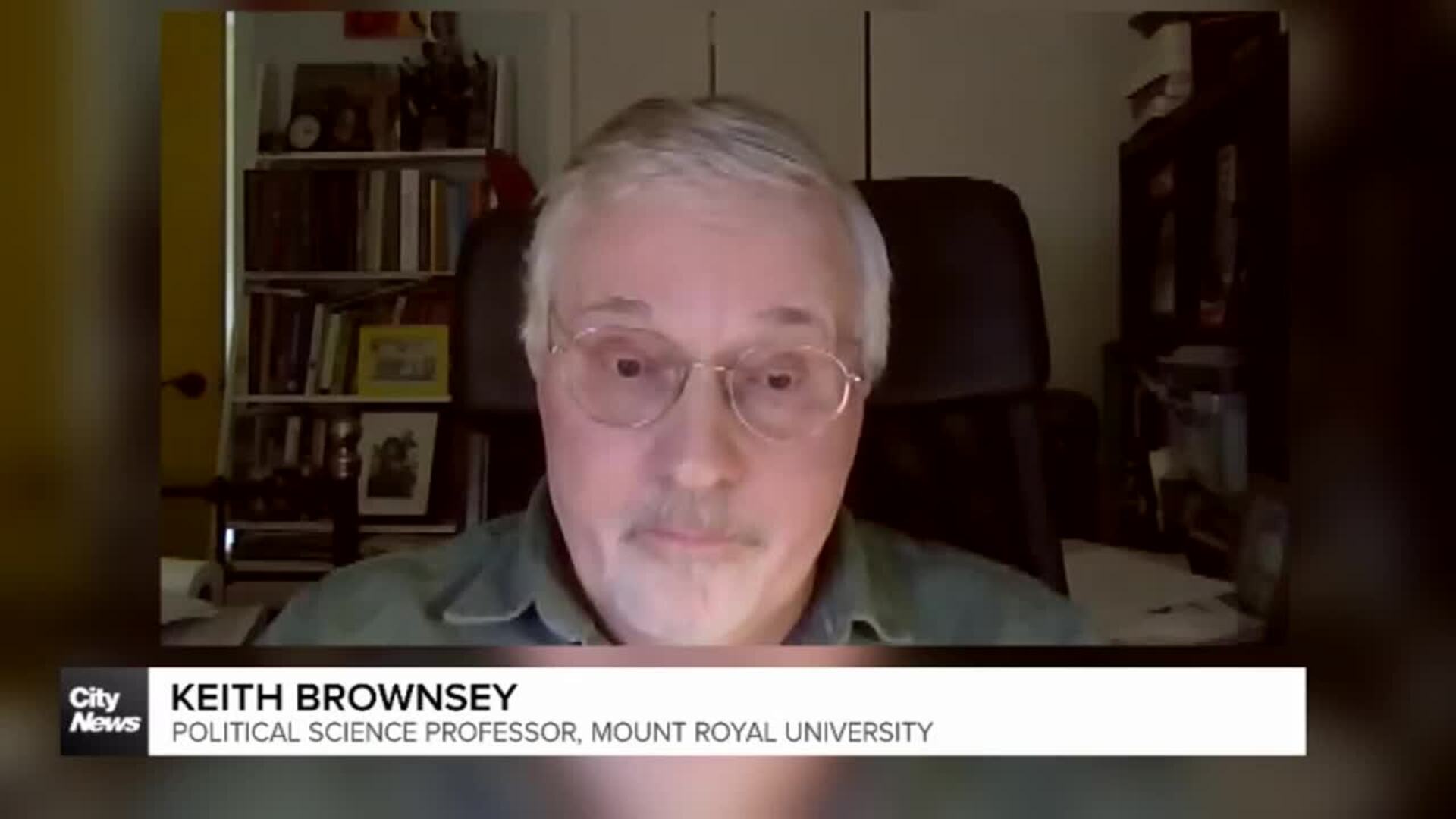
Mount Royal University political science professor Lori Williams says it will be interesting to see what the government does with the report once it’s completed.
“Sometimes the people who have been commissioned to do the report are seen as being sort of in a particular space in terms of what they already think. In other words, the selection of the researchers is, in some cases, suspected of coming to foregone conclusions,” she said.
“And I’m not sure that that’s going to be the case here.”
She says that while there are connections between the government and its board appointees, it’s not clear that the report is ideologically driven.
“But the fact that the government wants to review the findings before reporting to Albertans on it suggests that they do want to have a bit more control over the messaging on this,” she explained.
Alberta Premier Danielle Smith has said that an independent Alberta could face almost $400 billion in transitional costs and about $25 billion to $50 billion in annual costs.
UCalgary economist Dr. Trevor Tombe has also said the economy would shrink by four per cent, increase the cost of interprovincial trade between Alberta and the rest of Canada, lead to job losses, and result in hundreds of thousands leaving the province.
Smith’s figure on what separation would cost was blasted by separatists, who say it’s completely false. Williams doesn’t think this panel will persuade “diehard” separatists.
“But for those who are sort of soft separatists or persuadable, for those who are concerned about the economic costs of separation, this report — this and other sources of information — could give information that will help them to make a decision,” she said, pointing to recent polling that shows it’s not as popular as it was earlier in the year.
She also says the financial data is only one part of the decision, saying for some it’s a social, political, and even cultural decision.
“It has to do with the relationship of Albertans with people in other parts of Canada. It has to do with Alberta’s ability to insulate itself from influences from outside of the country,” Williams said.
“It has to do with the benefits. If you like, being part of Team Canada — as long as Alberta is able to protect its interests in the larger federal system.”
The final report is expected to be released in late summer, before the Oct. 19 referendum vote.
With files from Darren Rathwell