Calgary outreach groups report alarming spike in drug poisonings, overdose responses
Posted May 19, 2026 8:46 am.
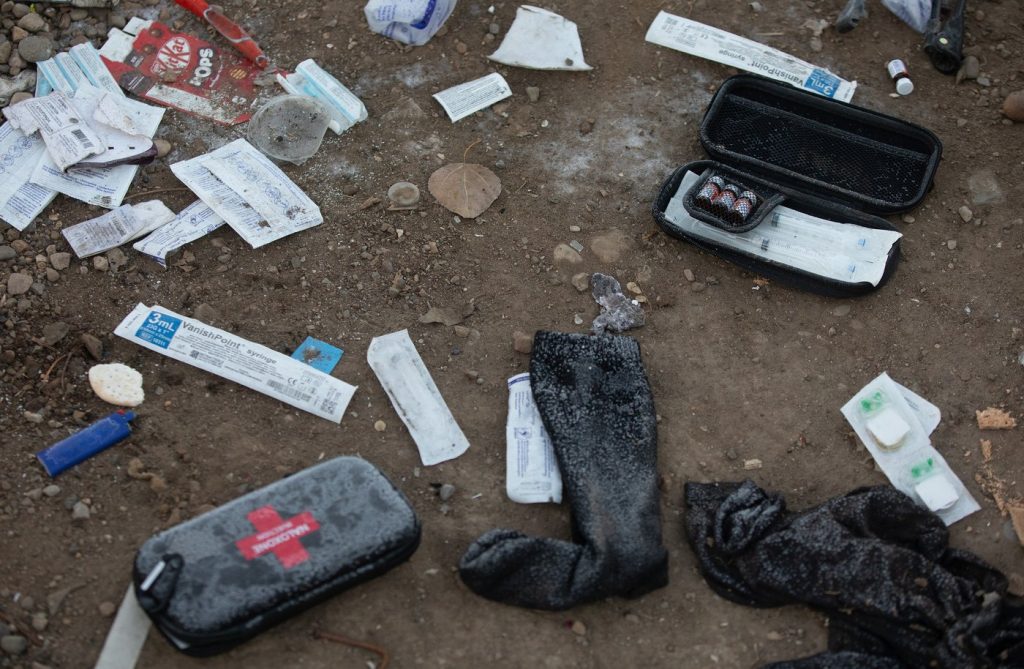
Drug poisonings are becoming more common at an alarming rate in Calgary, according to various outreach groups in the city.
According to the Calgary Drop-In Centre, there has been a four times increase in drug poisonings in April compared to 2025.
“In April 2026, we’ve responded to about an average of 20 drug poisonings a day at the Calgary Drop-In Centre. That’s a huge increase,” said David Sawatsky, the chief operating officer of the Calgary Drop-In Centre.
“At this time last year, we averaged about five.”
Karen McPherson, the operations director of BeTheChangeYYC, says the drug supply is being cut with veterinary sedatives, which has led to the spike in overdose responses, adding that it also makes naloxone less effective.
“Opioids are often mixed in with other substances. So the naloxone buys a little bit of time in reversing the opioid, but it doesn’t reverse the sedative,” she said.
McPherson adds that her organization experienced unprecedented levels of demand in April, saying that for the first time, they had to administer naloxone four times in a four-hour shift.
“That was a day that people had received checks from various government agencies, so there was a lot more money circulating. And of course, those people who distribute drugs are aware of what those days are, and they’re targeting vulnerable people,” she explained.
In a statement to CityNews, Calgary police say they have not observed significant changes to the substances being recovered, but add there is no such thing as a safe street drug.
Illicit drugs are often cut with unknown substances, meaning users cannot know the strength or safety of what they are consuming, which police say is extremely concerning.
Overdoses are unpredictable and can occur even when someone uses what they believe to be the same substance as before,” the statement reads.
“Illicit drugs are trafficked through complex networks, with many suppliers operating locally and connections extending across the province, country, and internationally.”
Both organizations rely on the University of Calgary’s wastewater analysis to learn more about the makeup of the drugs being consumed; however, the drop-in centre can also analyze drug paraphernalia for quicker results, and says the number of compounds is concerning.
“The shocking thing for us is recognizing how little we actually know, and how little the individuals we support know about what they’re actually purchasing and putting into their bodies,” Sawatzky said.