Largest recorded Alberta earthquake probably natural, scientist says
Posted Nov 30, 2022 2:37 pm.
Last Updated Nov 30, 2022 7:55 pm.
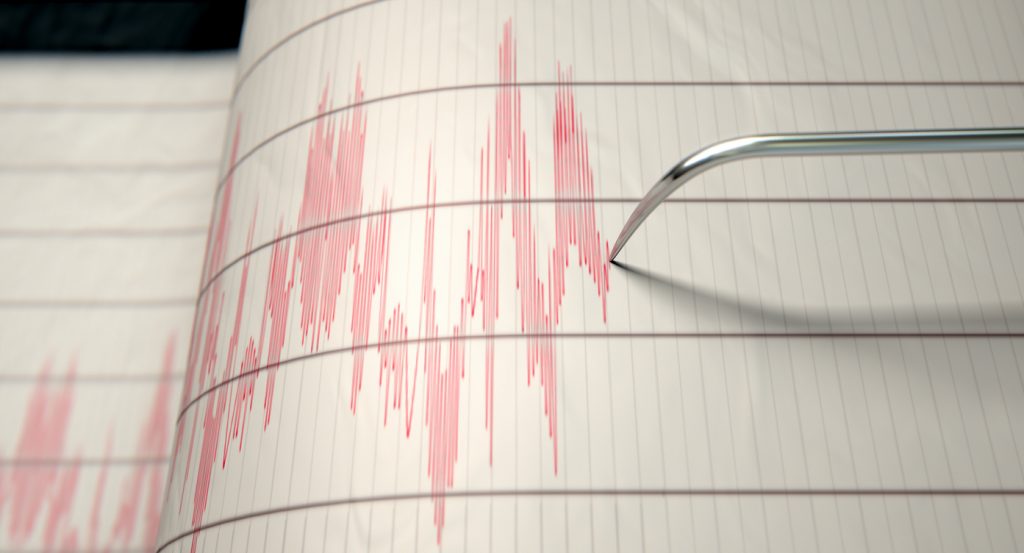
The largest earthquake ever recorded in Alberta, which rattled homes and nerves Tuesday, was probably due to natural causes, says a geologist.
Rebecca Salvage of the University of Calgary says the 5.6-magnitude quake that rumbled near Peace River in northwest Alberta originated at least six kilometres underground. That’s probably too deep to have been artificially caused, she said.
“The depth infers that it’s probably natural. Natural events typically occur at those depths.”
Stephen Johnston, the chair of the University of Alberta’s Earth and Atmospheric science department says, “This is quite a big anomaly for Alberta so I wouldn’t expect us to get anymore of this size earthquake, at least not for a long time.”
The Alberta Geological Survey reported that the series of seismic events near Reno, a tiny rural hamlet about 40 kilometres southeast of Peace River, began late in the afternoon and continued into the early evening.
“The crystalline basement under that part of Alberta, which we call the Peace River Arch, is full of old faults, and for some reason one of these old faults ruptured last night in a fairly spectacular way,” added Johnston.
The survey recorded the main quake at nearly 5.6 on the Richter scale, although other agencies measured it higher. It was preceded by two smaller quakes and followed by several aftershocks.
The previous record holder for the largest earthquake recorded in Alberta history was back in 2001, with a magnitude peak of 5.4.
Read More: Earthquakes shake up northern Alberta
Felt by Albertans
Carmen Langer, an area landowner, was climbing the stairs of his home when the quakes hit.
“I had to go right to my knees and grab a rail,” he said.
The quakes, which came on with the sound of a freight train, sent his light fixtures swinging, he said. He also saw the glass in the windows of his home flex.
“I guess you’re scared,” he said. “You don’t know what’s coming after.”
The quake even shocked many Edmontonians.
“At first, I thought it was maybe somebody on the floor underneath me jumping and my mind definitely didn’t go to earthquake I thought it was maybe some really strong winds because the day before it was really windy. I definitely didn’t think earthquake at first,” said a student from the University of Alberta.
Another explained, “All of a sudden it started shaking, my mirror started shaking. All of my roommates came to my room but it only lasted a couple minutes.”
RCMP reported no injuries from the quakes.
Energy extraction processes, such as fracking, have contributed to earthquakes in other parts of the province. But Salvage said those kinds of quakes typically happen in the earth’s upper layers.
She said scientists are aware of geologic faults in the area, although it’s too soon to know which one was the source.
Salvage said Tuesday’s tremblors are rare in Alberta and offer an exciting opportunity to learn more about the province’s deep geology. She said they are probably related to seismic events originating from when the Rocky Mountains were created.
“We do still get influences from the Rocky Mountains,” she said. “It’s feasible that some of the stresses from that are still dissipating across British Columbia and Alberta.”
When asked if another earthquake is possible, Johnston suggests that it could happen, but not for a long time.
“I suspect that these kinds of earthquakes have occurred in the past in Alberta. But they just don’t occur frequently enough for them to be a surprise when they do happen.”