Court hearing on possible injunction to stop Alberta separation movement begins
Posted Apr 7, 2026 2:00 am.
Last Updated Apr 7, 2026 6:29 pm.
A court hearing began Tuesday for an Alberta First Nation’s request to at least temporarily put on ice a petition to force a vote on whether the province should quit Canada.
Sturgeon Lake Cree Nation, as well as a handful of other First Nations, is challenging the constitutionality of Alberta’s citizen-initiated referendum process, saying its use by separatists violates treaty rights.
Orlagh O’Kelly, a lawyer for Sturgeon Lake Cree Nation, told an Edmonton court that an injunction is appropriate because there’s no rush to hold a vote, nor is there an “unbridled right to petition to break up Canada.”
Instead, O’Kelly said, Alberta’s process is the “legislative legitimization … of what we call the tyranny of the minority.”
The hearing, which is scheduled to last multiple days, is also expected to hear arguments from other First Nations challenging the referendum process, including Athabasca Chipewyan First Nation, located near the province’s oilsands.
A few dozen members of Sturgeon Lake and Athabasca Chipewyan First Nations were in the courtroom on Tuesday.
Stay Free Alberta, the group behind the separation referendum campaign, said last week that it has already collected more than the 178,000 signatures required to trigger a vote, although it has until May to submit its petition sheets to Elections Alberta.
Premier Danielle Smith has said that should the campaign get the required signatures, their referendum question would be put on a ballot this fall.
Indigenous leaders have been outspoken critics of the separatist movement, with one Alberta chief taking his concerns all the way to King Charles during a visit last month at Buckingham Palace.
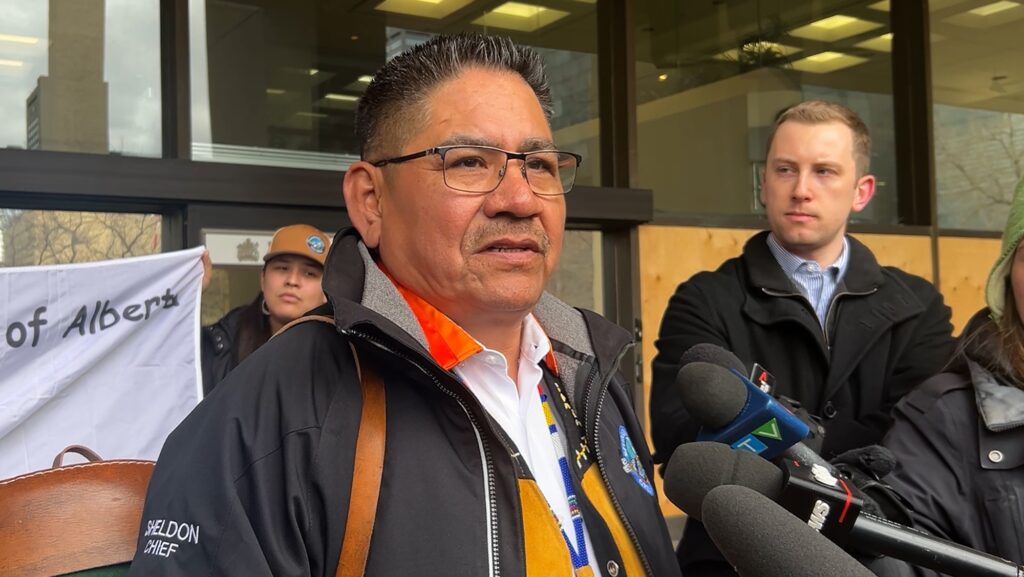
Sturgeon Lake Cree Nation Chief Sheldon Sunshine told reporters outside court that even if the injunction is granted, he expects Smith’s United Conservative Party government to respond by changing the law again to aid the separatists.
Last year, the province drastically reduced the signature threshold needed for referendum petitions and extending the time frame allowed to campaign.
Through another bill in December, the government also cleared legal hurdles for the separation movement by removing the requirement that questions put forward through the act be constitutional.
That bill also removed the ability of the province’s chief electoral officer to refer proposed questions to the court for an opinion, which was done the first time the separatist group applied for a petition.
Sunshine said Tuesday that he felt he had no other option but to fight in court.
“I think this is treaty nations taking a stand to defend their treaty. This is a treaty violation, plain and simple,” Sunshine said.
“We’re here today to assert our position that we are here and we’re not going anywhere.”
Justice Minister Mickey Amery’s office said the government recognizes and honours treaty rights but that it wouldn’t comment further given the matter is before the courts.
Jeff Rath, a lawyer for the separation petition group, told reporters it’s not clear to him what treaty rights are allegedly being violated.
He said that if an injunction is granted, he also expects Smith’s government to override it.
“The legislature will want to know what the signature count is at the end of the day,” Rath said.
“The legislature is entitled to that information.”
O’Kelly told court that Sturgeon Lake Cree Nation members have experienced heightened racism and feel as though the treaty relationship with the province has been significantly damaged since the petition was launched in January.
She also said First Nations entered into treaties with the expectation that the agreements would never be altered or amended, let alone be totally rewritten should the province separate.
Neil Dobson, a lawyer for the province, argued in court that the harm outlined by O’Kelly isn’t attributable to Alberta’s law.
“It is not the petition process itself that is spurring on these comments. These are comments by private actors who may or may not be associated with the separatist initiative,” he said.
Dobson said the petition process isn’t meant to empower one group over another.
“It’s agnostic,” he added.
Justice Shaina Leonard hasn’t said when she expects to issue a decision.