Winnipeg police seize $37M worth of drugs from ‘sophisticated criminal network’ linked to Mexican cartel, Hells Angels
Posted May 20, 2026 8:31 am.
Last Updated May 21, 2026 8:56 am.
It’s being described as the largest drug seizure in Manitoba history, and it’s the result of a nearly two-year-long operation involving police forces in Manitoba, Alberta and Ontario.
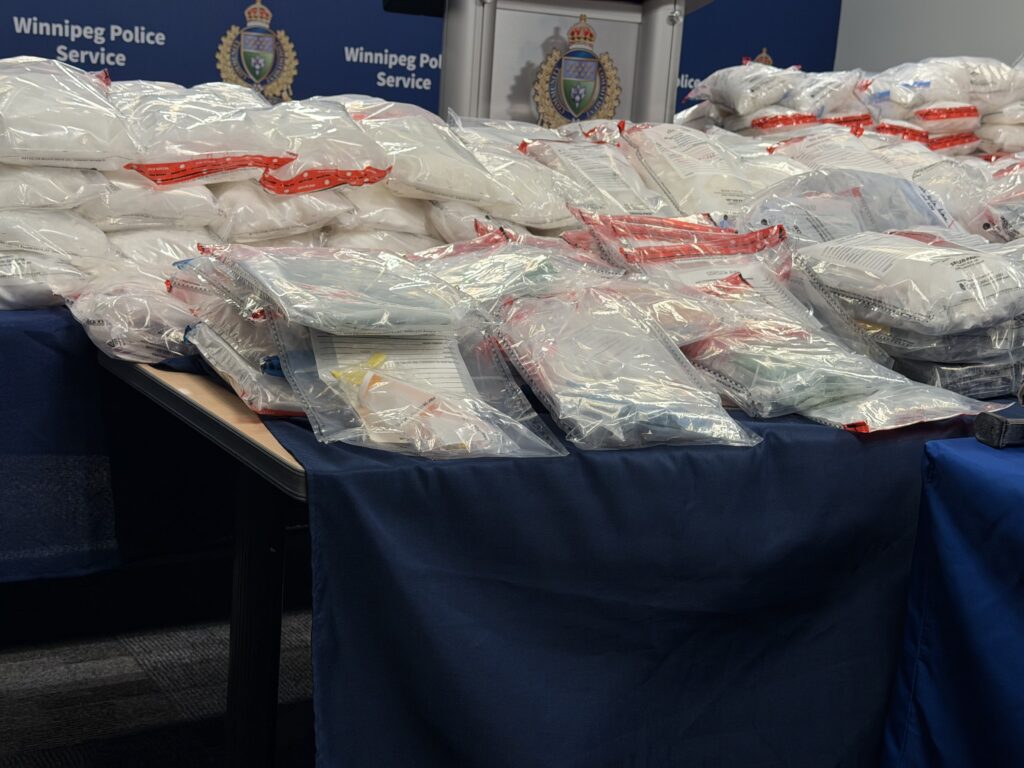
Winnipeg police say $37.2 million worth of drugs — methamphetamine, cocaine and fentanyl — was seized from a “sophisticated criminal network” responsible for importing the drugs from the United States into Manitoba and northwestern Ontario.
Authorities with Project PUMA say 33 people have been arrested, including a “core network of individuals” with alleged connections to high-ranking members of criminal organizations in Canada and abroad, like the Hells Angels, Wolfpack Alliance and Mexican cartels.
Those arrested were allegedly part of multiple drug-trafficking cells operating under a single umbrella organization that authorities believe was sourcing the drugs from a national-level supplier.
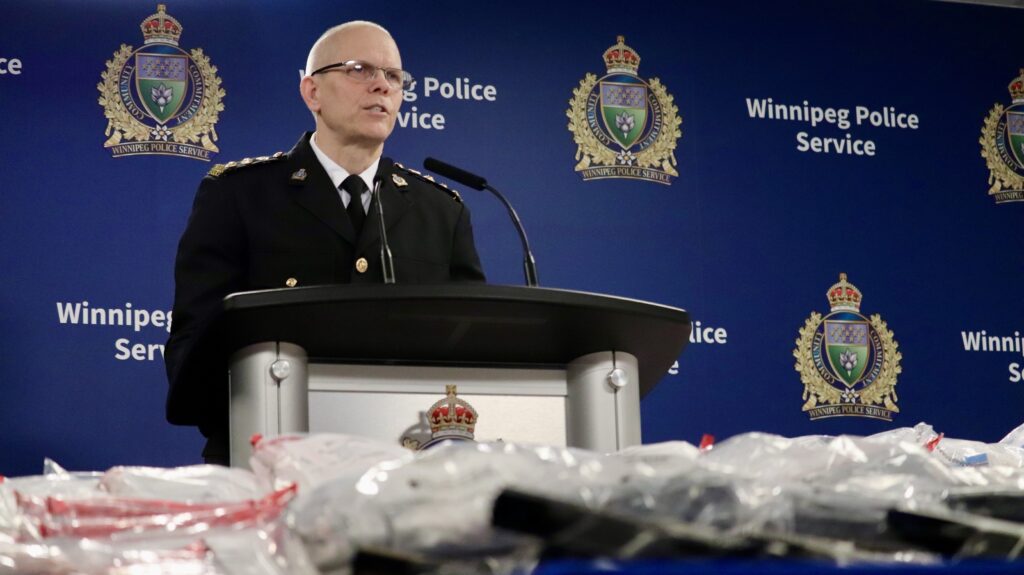
“The organisation exerted significant influence over the distribution of illicit drugs across Manitoba and other provinces,” Winnipeg Police Service Insp. Josh Ewatski told a press conference Wednesday morning.
Investigators say the substances were being imported into Canada using commercial transport vehicles before being warehoused, primarily in Alberta and Ontario. From there, police say the drugs were transported into Manitoba using mail and courier services, commercial transport vehicles, and private vehicles equipped with hidden compartments.
Ewatski says the criminals’ actions contributed to “violence, addiction, and significant harm within vulnerable communities.”
“We all see the crippling impact of the drug trade on daily basis,” added WPS Deputy Chief Cam Mackid, with investigative services. “We see the impact on individuals in the form of addictions, suicide, overdoses and we see the devastation brought upon families and loved ones of those who are struggling with addictions.”
7 suspects plead guilty
The 33 arrested suspects range in age from 19 to 63, with the vast majority coming from Winnipeg. The four arrested suspects from outside Manitoba are from Edmonton, Kenora, Ont., and Brantford, Ont.
They were collectively charged with 174 criminal offences relating to drug trafficking, proceeds of crime and conspiracy. Of the 33 arrested, police say seven have pleaded guilty, receiving sentences ranging from three to 16 years behind bars.
Two additional suspects from Brantford — Randy Chao and Tyler DeFelice — are still wanted by police on conspiracy charges.
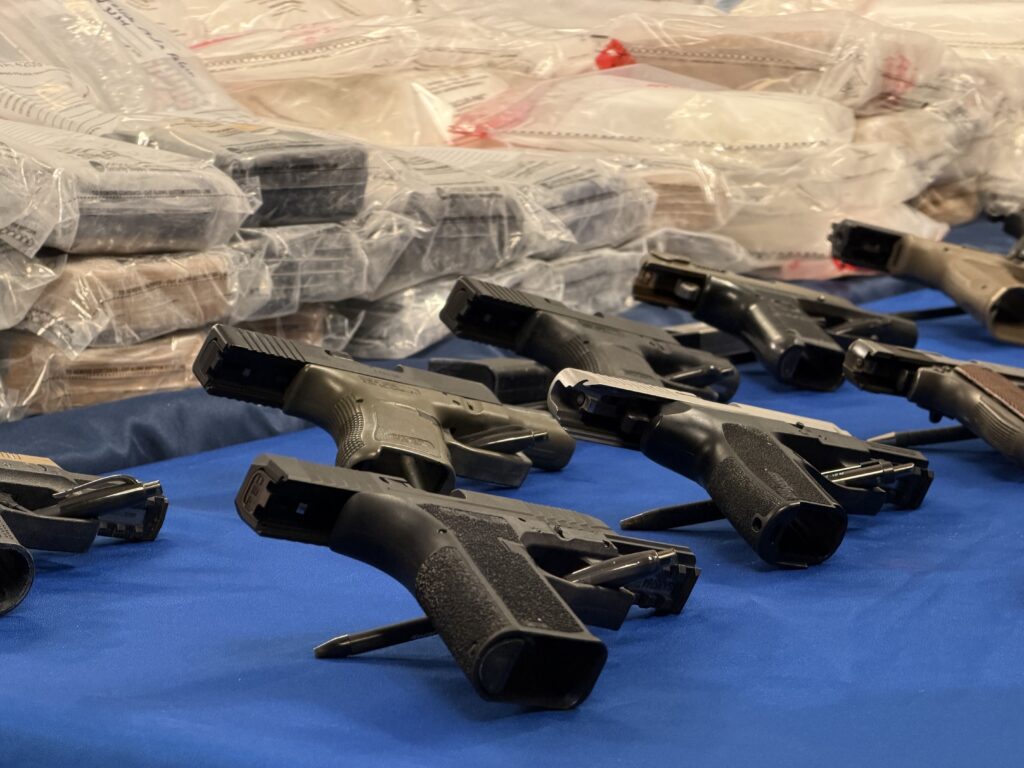
Police say they seized 339 kilograms of methamphetamine, 175 kg of cocaine, 11.25 kg of fentanyl, pills, 1.35 million illicit cigarettes, cannabis marijuana, 14 firearms, seven vehicles, and $825,000 cash.
The investigation lasted nearly two years, beginning in May 2024 and ending this March. It was a joint operation involving 13 agencies in Manitoba, Alberta and Ontario, including the Edmonton Police Service, Alberta RCMP, various branches of the Ontario Provincial Police (OPP) and FINTRAC.
It was funded by Manitoba Justice through the Manitoba Criminal Intelligence Centre (MCIC).
Manitoba Justice Minister Matt Wiebe says the arrests show Manitoba will not tolerate criminal organizations operating in the province.
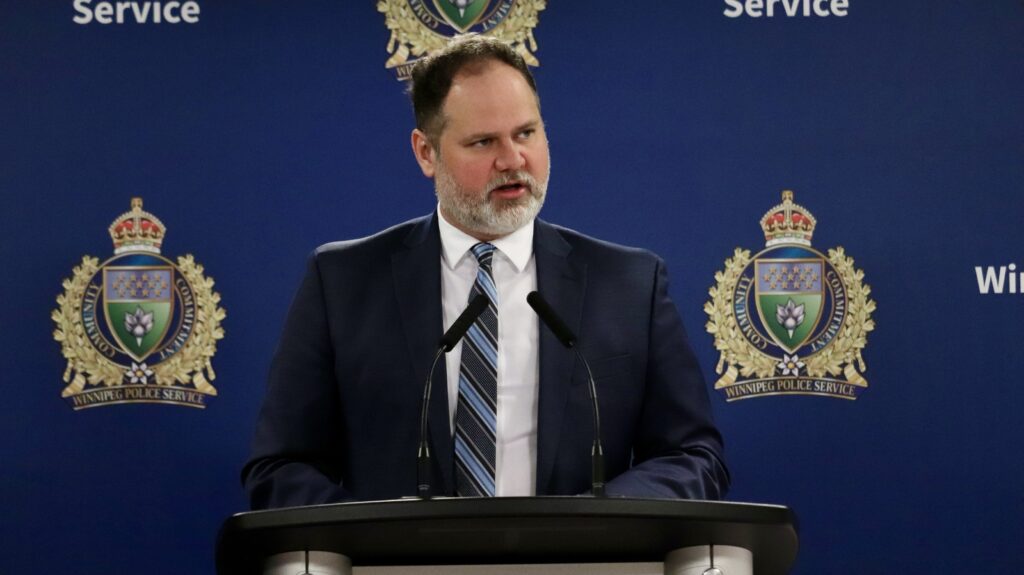
“It matters to the safety of our communities and families right across Manitoba,” Wiebe said. “Most importantly it matters because it sends out a clear message: organized crime will not operate unchecked in this province and we are not open for business to organized crime.”
Related police operations in Alberta, Ontario
A separate police operation conducted by the OPP in Fort Francis and Dryden led to the arrest of four additional suspects and the seizure of 26 kilograms of cocaine. Those individuals will be charged separately.
The Edmonton Police Service says it launched a drug-trafficking investigation following findings from the WPS investigation. That led to a search warrant in which 80 kg of cocaine, with a street value of $8 million, and other drugs were seized.
A 26-year-old was arrested and charged.
“We’re pleased our partners at the Winnipeg Police Service brought their large-scale investigation to a successful conclusion, and that EPS officers were able to locate and arrest a suspect in Edmonton found with more than 80 kilograms of drugs,” said EPS Staff Sgt. Jen McCann.
“Strong partnerships and intelligence sharing are essential to disrupting drug trafficking across the country.”
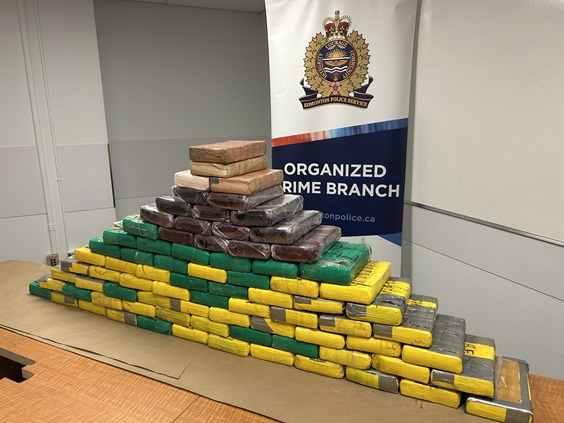
Meanwhile Parkland RCMP, west of Edmonton, say they began an investigation last spring into a Spruce Grove-area woman suspected of trafficking drugs. Authorities there say electronic and physical surveillance of the woman showed her movements extend beyond the Edmonton area — first to Calgary, and then further east into Manitoba.
Parkland RCMP contacted Winnipeg police, which determined the suspect was associated to targets in Project PUMA. Mounties say a traffic stop resulted in 53 kg of meth and five kg of fentanyl being seized.
“In this case, no single agency could have achieved this result alone,” said Insp. Kevin McGillivray, the officer in charge of the Parkland County RCMP. “It required trust, timely information-sharing, and a willingness to hand off and support efforts across provincial and organizational boundaries.”
Lawful access bill
Mackid says the passing of Bill C-22 is key for law enforcement to access digital evidence when carrying out major investigations. He called it “likely the most critical issue Canadian law enforcement is facing.”
“It deserves the continued attention and efforts of all parliamentarians,” he said.
Under the bill, authorities could demand that a telecommunications provider reveal whether it provides service to an individual or a number of interest — a measure intended to speed up investigations.
The bill would also require electronic service providers to develop and maintain the technical capabilities necessary to enable police and the Canadian Security Intelligence Service to effectively obtain communications and information for investigations.
There would be mandatory requirements for certain core providers — likely large telecommunications companies and satellite providers — to have specific capabilities. In addition, the public safety minister could issue a ministerial order to require a provider to develop a particular capability, even if they are not a core provider. The bill would prohibit a provider from disclosing the existence or content of a ministerial order.
A statement to CityNews from the office of Canada’s minister of public safety reads, in part: “We welcome all constructive debate on this matter to ensure that this legislation is effective, balanced, and responsive to Canadians’ needs.
“As this Bill proceeds through Parliament, we will continue to support law enforcement, protect our borders, and ensure the safety of Canadians across the country.”
–With files from The Canadian Press