Calgary’s supervised consumption site closes
Posted Jun 30, 2026 10:53 pm.
Calgary’s supervised consumption site is closed after more than eight years in operation, marking a shift in the province’s approach to addiction services.
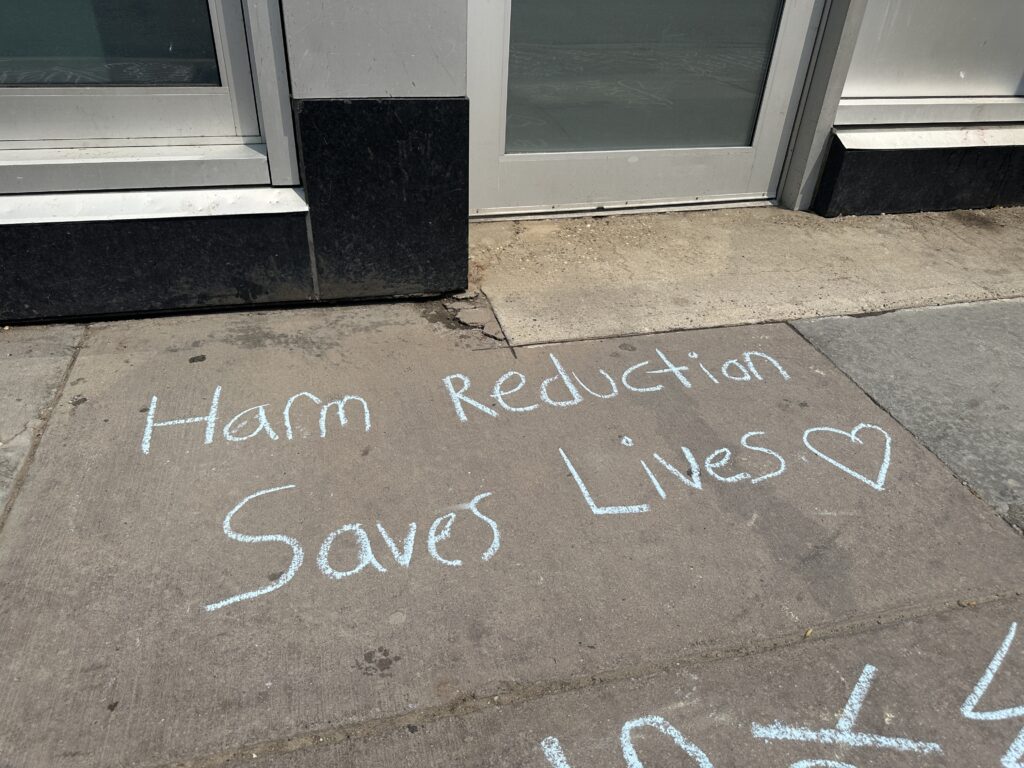
A chalk message reading “Harm reduction saves lives” sat outside the Sheldon Chumir facility as the province permanently shut the doors on June 30.
The site had provided a supervised location for Calgarians to use illicit drugs for nearly eight and a half years. Messages of support were scattered nearby, including one that read “opioid dependency programs saved my life,” with “Me too” written underneath.
The province says the space will be converted into a rapid access addiction medicine site offering treatment services.
Mayor Jeromy Farkas says he is “positively encouraged” by the plan but wants stronger provincial support.
“Looking at some of the peer‑reviewed research from other municipalities, it seems to show that as long as there’s a replacement provided for the services that the most vulnerable Calgarians need, we don’t skip a beat in terms of the public safety element,” says Farkas.
Ward 8 Coun. Nathaniel Schmidt says he’s worried the closure leaves a gap in services.
“The thing that’s worrying to me is that although the site itself is going away, the people that use the site are not going away,” he says.
Schmidt says he’s concerned the city and province don’t have a robust enough plan to immediately address the resources needed after the closure. One step he wants city council to consider is adding more mobile response units to the Calgary Fire Department, which has seen an increase in overdose calls.
The facility opened in October 2017 as the first of the province’s supervised consumption sites. It was followed by six others.
Data from Alberta’s substance use surveillance system dashboard shows that from October to December of last year, more than 9,000 people used the site in Calgary.
The government has been gradually shuttering such facilities across the province as it shifts to a recovery-centred approach.
With files from The Canadian Press