10+ : Calgary air quality suffers under thick wildfire smoke, precautions urged
Posted Jul 24, 2026 12:22 pm.
Last Updated Jul 24, 2026 12:23 pm.
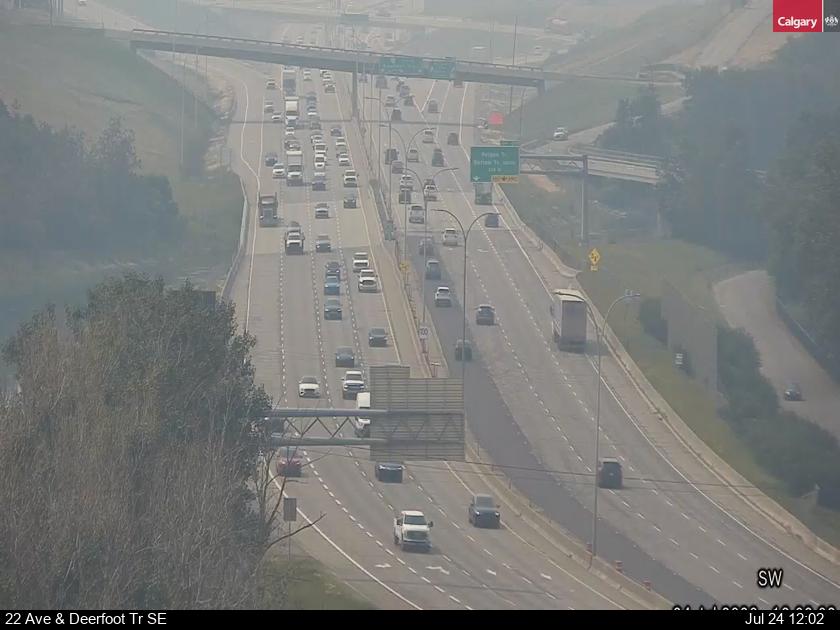
Air quality warnings stretched across a wide swath of central and southern Alberta Friday, but Calgary is among a smaller section of the province dealing with a more intense concentration of wildfire smoke.
Friday the city was rated at a 10+ on Environment Canada’s Air Quality Health Index, which signifies the highest risk level.
As well, the city was placed under an orange warning from Environment Canada, which also applied to an area stretching past Airdrie and north of Cremona, as well as west of Banff, and points south.
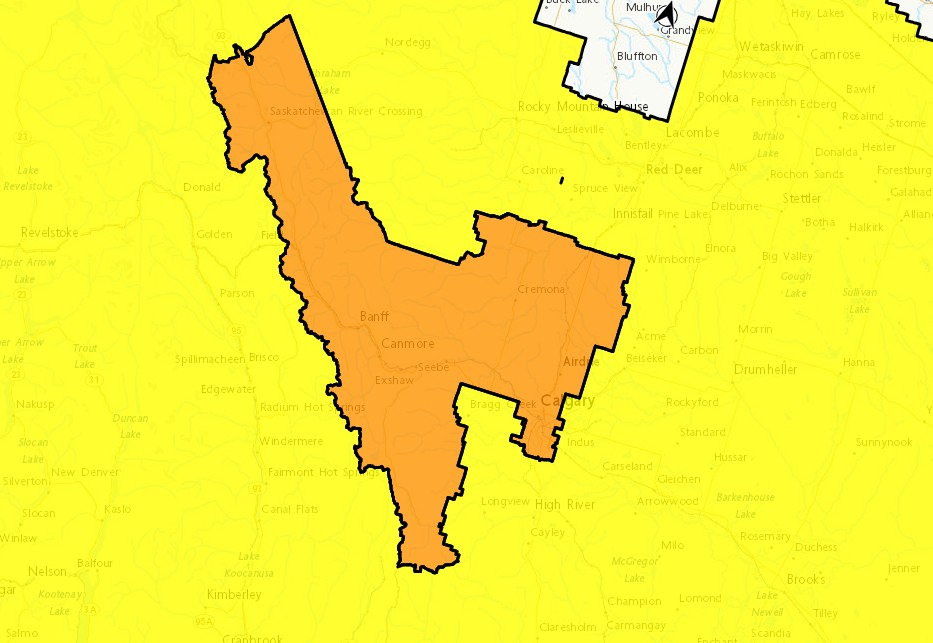
“Smoke is causing very poor air quality and reduced visibility,” reads the weather agency statement, “During heavy smoke conditions, everyone’s health is at risk regardless of their age or health status. Limit time outdoors. Reschedule or cancel outdoor sports, activities, and events.”
Environment Canada says air quality and visibility due to wildfire smoke can change rapidly over short distances and from hour to hour.
However, “conditions are expected to improve for most areas this weekend.”
Heat and air quality warnings were in place in Calgary Thursday. A heat warning was no longer in effect Friday; however, temperatures are forecast to remain in the high 20s for the next several days.
High air conditioning demand but cost an issue
Calgary Air Heating and Cooling say demand for air conditioning is high currently, but affordability is an issue and many are seeking financing.
Residents CityNews spoke with say air conditioning is a necessity despite the cost.
“I just have like a little unit so yeah honestly kind of is just to sleep at night.”
Another resident said, “We typically don’t use the AC a lot but you kind of need to when you have smoke and you can’t leave the windows open then we shut everything up and rely more on the AC.”
Environment Canada says, “People more likely to be impacted by wildfire smoke, including people aged 65 and older, pregnant people, infants and young children.”
Others who should take extra precautions include “people with an existing illness or chronic health condition, and people who work outdoors. (They) should avoid strenuous activities outdoors and seek medical attention if experiencing symptoms.”