Wire snaps force road closure as Calgary confronts renewed feeder main risks
Posted Feb 13, 2026 5:49 pm.
Last Updated Feb 13, 2026 6:10 pm.
A familiar sense of unease returned to Calgary’s northwest Friday morning after Mayor Jeromy Farkas announced that two new wire snaps were detected along the Bearspaw feeder main.
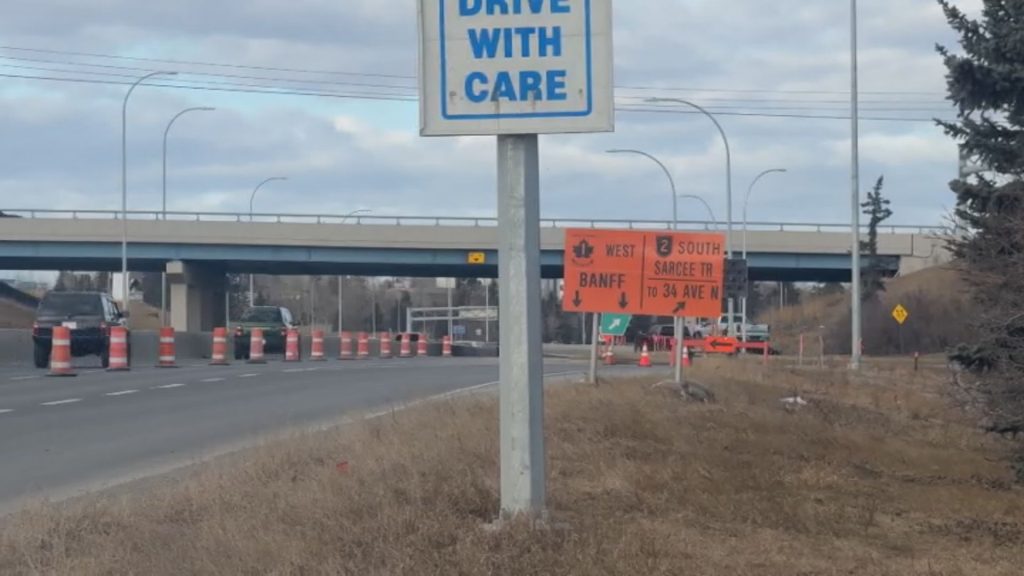
The snaps prompted the city to immediately shut down the westbound 16th Avenue NW exit to Sarcee Trail as a precaution.
City officials say the snaps, each occurring in separate segments of the aging pipe, were picked up through fiber‑optic monitoring. While the feeder main continues to operate, the city says the deterioration warrants proactive traffic restrictions and evolving risk‑mitigation strategies.
A detour is now in place, rerouting drivers to 29 Avenue NW. The closure will remain in effect indefinitely.
Residents and businesses in nearby communities are already bracing for the ripple effects.
Russ Beatty, who lives in Bowness, says he’s not overly concerned as long as key routes remain open.
“As long as they have 16th Avenue west open to Bowfort, I’m ok with it, because then you can bypass,” he said.
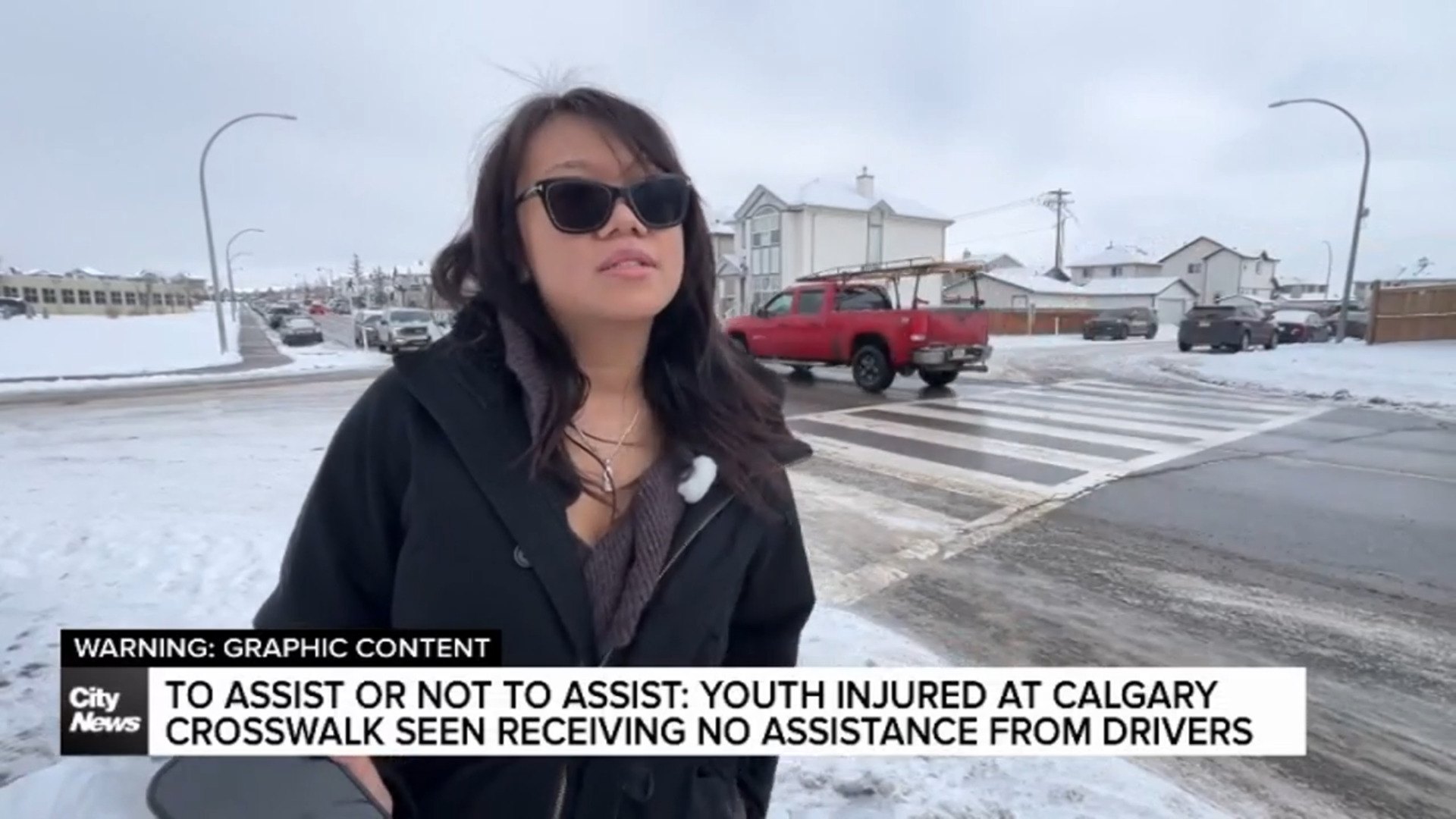
But for others, the news feels like a return to the gridlock that followed December’s major water main break in nearly the same location. Montgomery business owner Loann Ly worries about the impact on customers.
“Traffic is really stuck on Bowness Road, but when things happen, they happen,” she said. “I hope the city will do something to fix it better.”
Farkas defended the closure, emphasizing the unpredictability of the situation.
“This pipeline could break at any single moment,” he said. “We need to be ready for that… we need to be sure we could respond in an emergency.”
Engineering experts say the concern is justified.
Kerry Black, an associate professor and Canada Research Chair in the University of Calgary’s engineering department, explains that the feeder main relies on steel wires wrapped around the pipe for structural stability. As the pipe exterior deteriorates, those wires become vulnerable.
“One snap does not necessarily mean something bad is going to happen,” Black said. “But multiple snaps, especially if there were existing breaks before monitoring began, raise concerns about whether that whole piece could collapse, similar to what happened at Christmas and about a year and a half ago.”
Black called the city’s decision to close the exit a responsible one, noting that historically, deterioration in this pipe has not been detected until failure is imminent.
Farkas also signaled that Calgarians should expect a return to water restrictions this spring and summer as work continues on replacing the feeder main.
The city recently released its construction plan for Stage B of the Bearspaw South Feedermain replacement, covering the stretch from 73 Street NW to 89 Street NW using an open‑cut method. Pipe installation is expected to wrap up by October.
For now, the city says it will continue monitoring the compromised segments and adjust its response as conditions evolve.