Former Alberta judge tapped to chair panel re-drawing electoral boundaries

Posted Jun 2, 2026 11:55 am.
Last Updated Jun 2, 2026 5:40 pm.
Alberta’s governing United Conservative Party has tapped a retired judge to chair the province’s new political boundaries panel.
Former provincial justice Brian O’Ferrall will head a panel, overseen by a UCP-led committee, to redraw a map marking all electoral ridings across the province.
The Opposition NDP is questioning whether O’Ferrall can be seen as impartial given he has donated money to the UCP, and expressing serious concern only two people applied for the job.
But UCP committee member Garth Rowswell told the committee Tuesday that O’Ferrall was free to participate in the political process after he retired from the bench.
“I trust that given his experience as a justice that he will be able to act with integrity and impartiality in this process,” he said.
Rowswell also said O’Ferrall’s experience practising law for decades — including in regulatory, environmental and energy-related matters — means he can hear diverse perspectives and balance competing interests.
READ MORE: Redraw of electoral boundaries would present challenging timeline: Elections Alberta
The appointment comes as the province takes a second run at redrawing provincial electoral maps ahead of the 2027 election.
Premier Danielle Smith’s government has said it’s about ensuring there is fair representation for rural areas, and to that end, it increased the number of ridings that will be added to ensure rural Alberta doesn’t lose any seats as the province’s population shifts more to urban areas.
The NDP has said the UCP is using the rural representation issue as a way to redraw multiple ridings to give them an unfair advantage come election time.
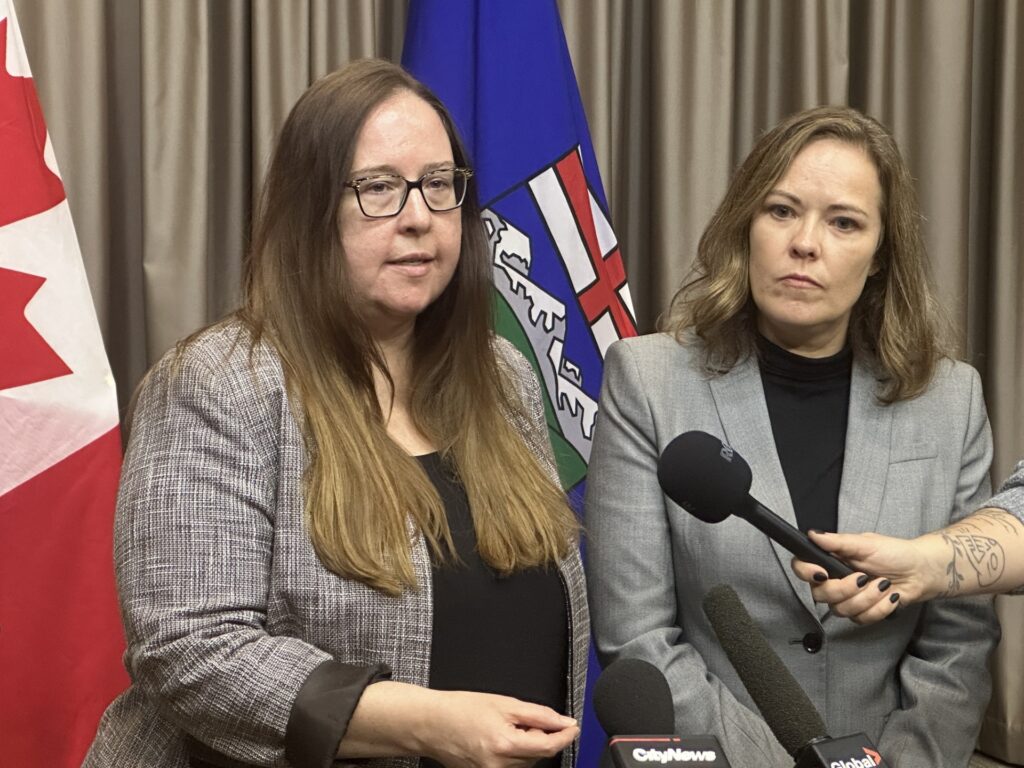
Speaking to reporters Tuesday after the latest meeting, NDP committee member Kathleen Ganley said it’s not wrong for a retired justice to make political donations.
However, she said those donations suggest a partisan affiliation, which is why the NDP had tried to restrict the position to a sitting justice.
“The exercise we’re doing has a massive impact on the fortunes of political parties and about Albertans’ ability to decide who governs them — I think it’s important that we have a non-partisan person doing this,” she said.
NDP member Christina Gray said O’Ferrall has an excellent resumé and body of work, but the entire process has created an air of distrust.
“We tried to pass motions to have an interview process or other measures of transparency and were rejected at every turn,” she said.
Both the UCP and the NDP will each need to nominate two people to round out the rest of the five-person panel by Friday.
The review will see the legislature seat count rise to 91 from 87, and the panel is to submit its maps to the UCP-led committee by the fall.
The rejigged boundary drawing process hasn’t got off to a smooth start.
The acting chief justice of Alberta, Dawn Pentelechuk, had declined last month to forward an invitation from the committee to help appoint a panel chair.
Pentelechuk cited “the irregularity of this process.”
Following suit, the Canadian Bar Association’s Alberta branch and the Law Society of Alberta pointed to Pentelechuk’s letter when they, too, declined to get involved.
In a statement, a law society spokesperson said the professional regulator respects the authority of the chief justices over their courts.
“We have not, and would not circulate documents or messages to the courts unless specifically requested to do so by the chiefs themselves,” they said.
The new boundary review could cost taxpayers another $450,000, after the previous boundary commission, which included months of public consultations, cost an estimated $1 million.
That bipartisan boundaries report was split in its recommendations.
Chair Dallas Miller, in an effort to avoid the minority report’s alternative boundaries that would blend many urban and rural ridings, suggested a compromise.
Miller said the legislature could revisit the process, with an eye to boosting the number of ridings to 91.
NDP Leader Naheed Nenshi’s party has since been calling for the UCP to simply adopt the majority report’s proposed boundaries.
The UCP has said the new, expedited process will take into account public feedback already provided to the previous boundaries commission.