Oilpatch holding off on investment changes despite crude price surge
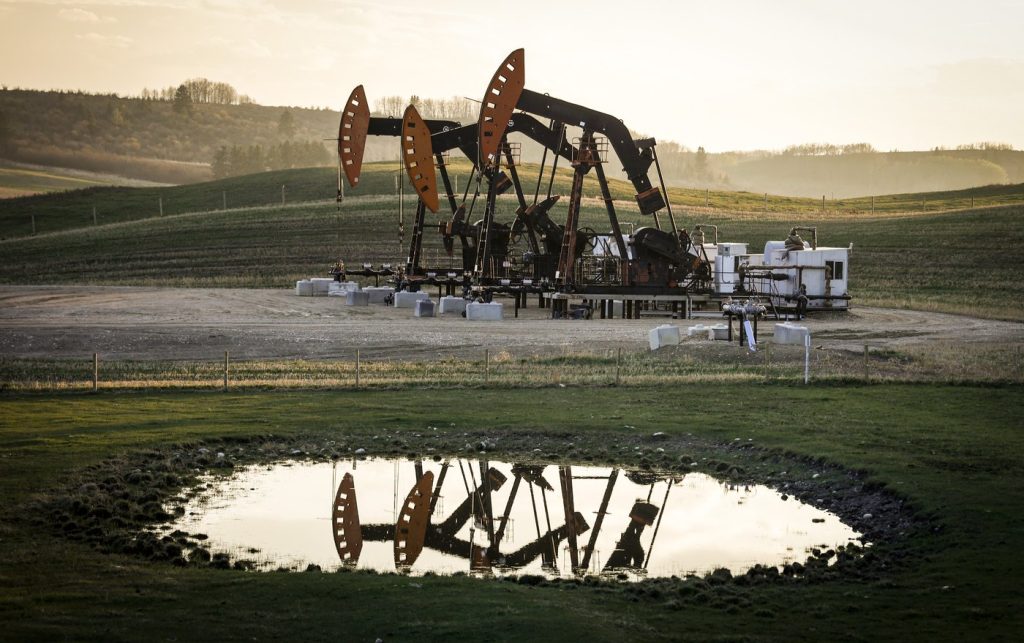
Posted Apr 15, 2026 9:36 am.
Last Updated Apr 15, 2026 12:46 pm.
Canadian oil and gas producers are benefiting from the surge in commodity prices driven by the Middle East war, but they say it’s not changing their investment plans in the near-term.
It’s too early on in the crisis, triggered in late February when the U.S. and Israel attacked Iran, to know what the enduring changes to the market are going to be, Cenovus Energy Inc. chief executive Jon McKenzie said.
“When we make capital investments in our industry, we have to take a much longer perspective. We certainly never make capital decisions based on the kind of prices that we’re seeing today,” McKenzie said in an interview as the 2026 BMO CAPP Energy Symposium took place in Toronto this week.
The conflict has squeezed tanker traffic through the Strait of Hormuz, a narrow waterway connecting the Persian Gulf to the open sea. One fifth of the world’s oil and liquefied natural gas shipments normally moves through the channel.
Global crude prices have surged as much as 70 per cent above prewar levels to close to US$120 a barrel. On Wednesday, West Texas Intermediate was trading closer to the $90 mark, still almost a 40 per cent jump up from before the conflict.
“We use much lower benchmarks to make sure that we are resilient through the cycle,” McKenzie said. “What we’ve seen through the years is it’s just as easy to come to US$100 a barrel as it is down to US$45.”
Tamarack Valley Energy Ltd., which has two conventional oil projects in Alberta, isn’t changing its 2026 capital budget at this stage, but chief executive Brian Schmidt said the company is speeding up some already planned oil drilling in order to keep its options open for later in the year.
“Because of the nature of our drilling, we can respond quite quickly,” he said in an interview.
Schmidt added that Tamarack Valley could be “a little more aggressive” if there were more pipeline capacity available to connect with overseas buyers.
Meanwhile, Tourmaline Oil Corp. is enjoying much higher cash flows from its liquids-rich natural gas production in British Columbia and Alberta.
“Having said that, we are not able to add incremental production into these international markets,” said Jamie Heard, vice-president for capital markets at Tourmaline, Canada’s largest natural gas producer.
“The pipelines, the LNG plants are already full and contracted. We’re enjoying the pricing from those contracts today, but to set up a new contract takes years of investment and negotiation.”
The war has knocked out LNG output in Qatar, one of the world’s largest producers. That has sent natural gas prices soaring in Europe and Asia. But in Alberta, natural gas prices remain relatively muted thanks to a warmer-than-usual winter that has crimped demand for the home-heating fuel.
“Any incremental investment in our basin right now would actually not make a great return because they would receive that lower price,” said Heard, adding the company plans to focus its capital program on the latter half of the year and wait for local market dynamics to improve.
Birchcliff Energy Ltd, whose production is made up of 80 per cent natural gas and 20 per cent oil, is holding spending steady for 2026, but might contemplate some changes in 2027, CEO Chris Carlsen said.
Current crude prices are high, but contracts for delivery later in the year drop off toward the US$70-a-barrel mark, making it harder to justify meaningfully boosting investment, he added.
In the meantime, Birchcliff is going to have more free cash flow at its disposal, Carlsen said.
“We’ll continue to pay our dividend that we’ve had in place, which is about $33 million. And then we’ll use the additional free cash flow to strengthen our balance sheet and essentially pay down debt.”